
Growing the forces: Canadian military upgrades
Serena Kanji-Ramji, Photo Editor
In the aftermath of Canada’s relationship breakdown with the United States, Prime Minister Mark Carney has started re-evaluating the country’s military defence.
On Oct. 29, the federal government released a new national security strategy titled ‘The Plan for a Stronger Canada.’
According to the strategy breakdown, the five-step comprehensive plan outlines how Canada will strengthen its defence against the “new and evolving threats” it’s facing.
In a recent press release, Carney highlighted the importance of Canada’s ability to maintain independence.
“In a rapidly changing, more dangerous, more divided world, Canada must have the capacity to defend our sovereignty, the resilience to withstand emerging threats, and the determination to shape our own future,” said Carney.
The primary focus of the new plan is rebuilding Canada’s national defence strategies and policies.
The Plan for a Stronger Canada is the country’s first new national security plan in 20 years.
Rebuild and regroup
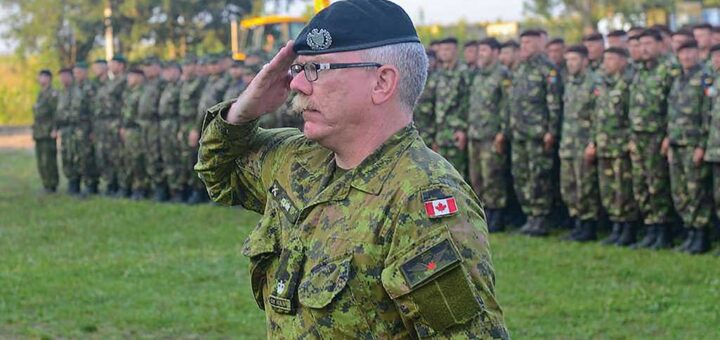
The third point in the document focuses on rebuilding and strengthening the Canadian Armed Forces (CAF) to ensure Canada is prepared to defend the country and its interests.
According to the Parliamentary Budget Office, under the Liberal government’s proposal, military defence spending will hit $163.6 billion by 2035.
This increase in spending would allow Canada to meet NATO’s benchmark of five per cent of a country’s GDP in ally investment in military and security.
The promise of further investment comes after a heavy year of upgrades for the military.
In July 2026, Canada reached NATO’s defence spending target of two per cent, which allowed the government to secure 20 defence partnerships this year.
In addition to reaching the spending target, Carney invested $2 billion in 190 armoured combat support vehicles, bringing the total to 360 to 550 vehicles.
This came after Canada announced that Thyssenkrupp Marine Systems had been awarded the contract for the new military submarine fleet.
Negotiations for the contract are set to end sometime in 2027.
Why now?
While the federal government has not named U.S. President Donald Trump and his caucus as the reason for these upgrades, the calls for a reinforced CAF come as tensions continue to rise between Canada and the U.S.
Since his reelection in 2024, Trump has expressed his desire to expand the U.S. border into Canada and has maintained a rocky relationship with Canadian officials. With multiple threats of annexing Canada into the “51st state” and declaring Lake Ontario be renamed Lake America, Trump has positioned his government as a threat to Canadian sovereignty.
While there was once a time when Canada understood that national security could be provided by the American military, this is no longer the case.
At the unveiling of the Defence Industrial Strategy in February, Carney spoke of how turbulent relations with the U.S. meant a loss of trust in the boarding-sharing ally.
“The assumptions that defined decades of Canadian defence and foreign policy have been turned upside down,” says Carney at the DIS unveiling as reported by The Globe and Mail.
In a reflection of Canada’s reliance on foreign military, Carney said that over the last decades, the country has not invested in the CAF or the defence industries.
Looking ahead
With The Plan for a Stronger Canada unveiled, it is clear that the role of the military in Canada’s future will continue to be a large, complex and ongoing conversation.
Carney’s government does not appear to be holding back when making strides towards upgrades and improvements with both intelligence and armoury investment.
All of which is aided by the fact that the Canadian Armed Forces have had their highest recruitment rate in 30 years, in part to the CAF cutting the previously required aptitude test.
With an original target of 6,957 recruits, they surpassed it, enrolling 7,310 members.


