
When the weapons fall silent, the damage remains

Bella Coco, Publishing Editor
The smoke has cleared, the gunfire has stopped, and soldiers have vacated the battlefield. But underneath the silence of lives lost, craters scar Earth’s skin, forests succumb to ashes and pollutants infect our soil and waterways.
For the environment, the end of a war rarely ends its destruction. From the muddy trenches of the First World War to oil fires in the Middle East, the natural world continues to bear the cost of conflict.
War against the land
Long before the world wars, environmental destruction had been an unspoken casualty of warfare for centuries. Tactics such as crop burning, resource stripping, and destroying irrigation systems were often used to weaken enemy troops and local populations. These tactics, known as the scorched-earth policy, turned the land into an agent of military strategy.
Emmanuel Kreike, author of Scorched Earth: Environmental Warfare as a Crime against Humanity and Nature, explored deliberate environmental destruction for the gain of warfare and its contributions to famine, disease, and the devastation of agricultural systems.
By the 19th century, the Industrial Revolution had rapidly expanded warfare’s grip on natural resources. Destruction of the land went beyond landmines and explosions, extending into factories. Forests were unwillingly stripped of their timber for ships and infrastructure, and raw materials were increasingly extracted to keep up with growing military powers.
By the 20th century, environmental damage went global.
Industrial warfare on the environment
The First World War introduced environmental destruction on an industrial scale never seen before.
Artillery bombings and explosive fighting tactics destroyed farmland, landscapes and forests, while chemical weapons, such as tear gas and mustard gas, caused corrosion, soil contamination and poisoned waterways.
However, the pollution caused by these tactics persisted well beyond 1918. Former battlefields in France have absorbed chemicals, arsenic, and various heavy metals — leaving the soil barren and unable to support natural flora and fauna.
The Second World War intensified the consequences, with military campaigns leaving cities in ruins and spurring the mass production of ships, weapons and aircraft. The Pacific Islands have remained a graveyard for shipwrecks, leaving toxic pollutants to leach into the ocean and severely affect food chains and marine ecosystems.
2001 and beyond
The wars following September 11, 2001, ushered in a new era of environmental destruction. In Afghanistan and Iraq, fuel consumption, negligent waste disposal and remnants of explosives created hazards that outlasted the battles.
During the “war on terror,” the U.S. military released 1.2 billion metric tons of greenhouse gases, which, according to the Watson Institute at Brown University, would have a larger warming effect than the annual greenhouse gas emissions of 257 million cars.
Over 1.9 million U.S. military personnel were deployed during the wars in Afghanistan and Iraq, leaving the average metric tons of greenhouse gases to be approximately 6,315 metric tons per U.S. military personnel. The average American’s carbon footprint over a lifetime is approximately 1,540 metric tons, four times less than that of a U.S. military service member during the Global War on Terrorism.
However, the environmental impact of war has far more immediate consequences before it travels through our atmosphere. For those stuck in conflict zones, unsafe conditions and open-air burn pits have resulted in increased cancer rates in locals and veterans.
Ukraine’s environmental crisis
Russia’s invasion of Ukraine in February 2022 is a testament to how modern warfare can desecrate entire ecosystems. While the World Wildlife Fund (WWF) has stated that it is too early to release a detailed report on the environmental damage in Ukraine, the growing scope of the damage remains a concern.
Home to a diverse range of species and habitats, Ukraine is part of the broader “Green Heart of Europe.” This stretch of land and ecosystems contains 35 per cent of Europe’s biodiversity and 70,000 plant and animal species.
As Russian military intervention continues, large-scale military vehicles and operations have damaged habitats, including 100,000 hectares of ecosystems destroyed by fires.
The Ukrainian Ministry of Environment and Natural Resources reported that 30 per cent of all protected areas in Ukraine have endured negative impacts from explosives, oil pollution and other “military maneuvers.”
While urban revitalisation and the restoration of essential services remain a priority following conflict, environmental recovery has yet to be included in the conversation. Without sustained monitoring and remediation, the natural world will remain a casualty of war long after the weapons are put down.
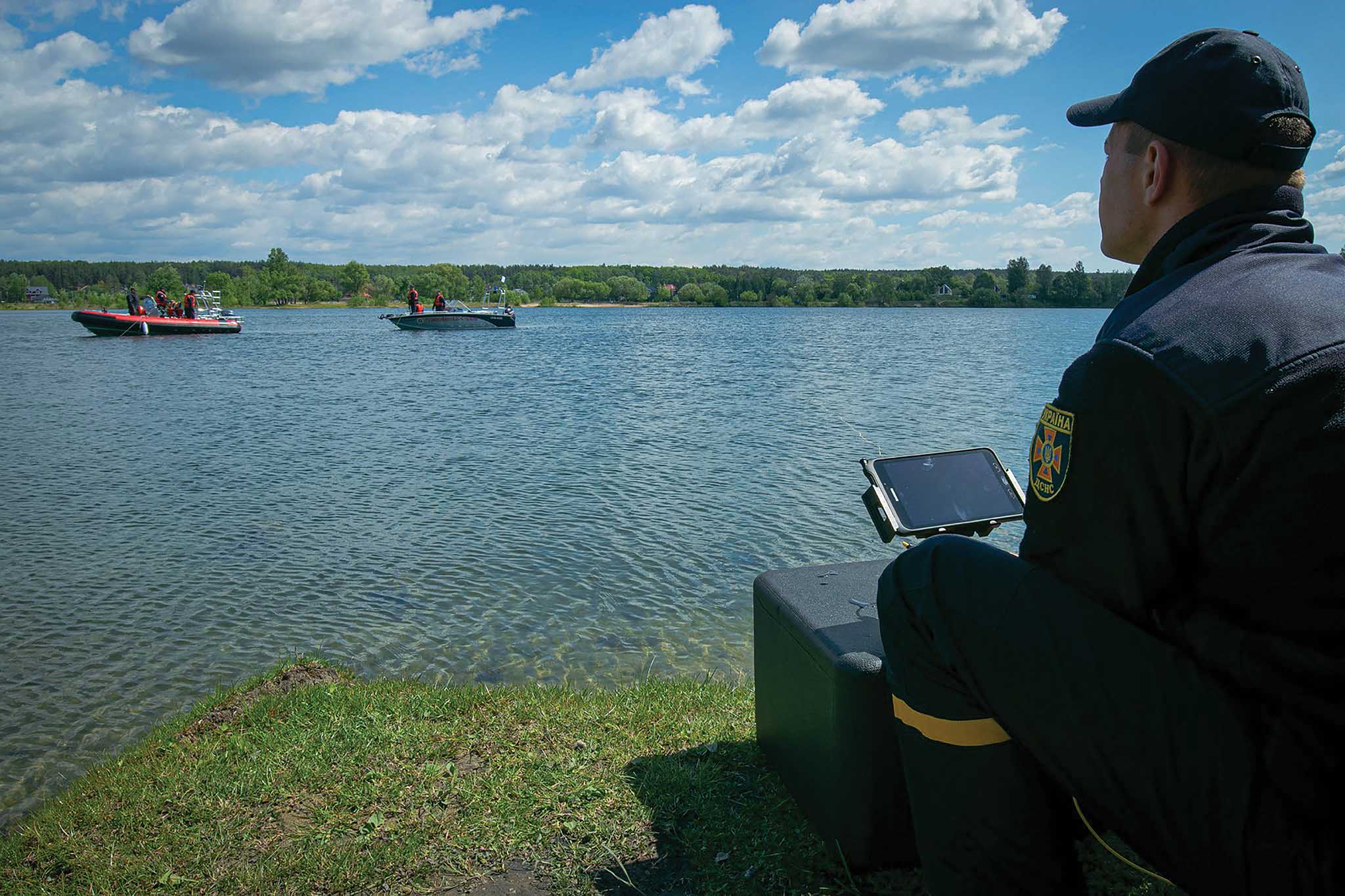
Rescuers continue searching for explosives across Ukraine, like the search in Lake Blakytne
in the village of Gorenka. Photo courtesy of The State Emergency Service of Ukraine / World
Wildlife Fund

