
Is lab-grown chocolate the next Frankenstein?
Rylie Perry, Arts Editor
If our favourite Halloween friend was made in a lab, why can’t chocolate be?
Lab-grown chocolate, also known as cell-cultured cocoa, is a process by which samples of cocoa plant cells are grown, replicated, and harvested in a cultivator. It is a form of rapid indoor farming that uses specialised bioreactors to accelerate the agricultural process from months or years to mere days.
In the bioreactors, which are large, controlled tanks, these tiny cell samples are fed sugars and nutrients that aid replication, while producing the fats and flavour compounds found in natural alternatives.
While this Frankenstein-cocoa is not yet commercialised, lab-grown chocolate is not far from shelves.
It’s alive
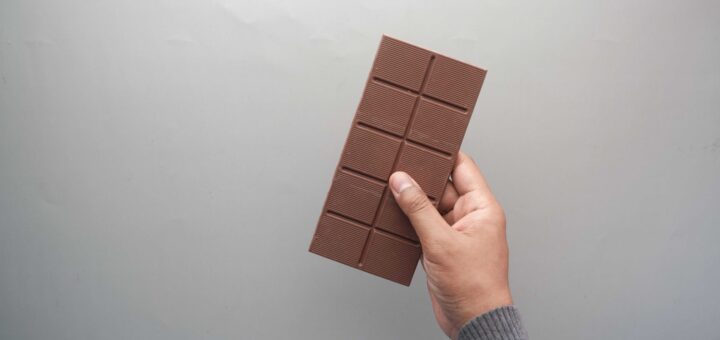
Celleste Bio, an Israeli cocoa-technology start-up, has already produced the world’s first lab-grown chocolate bar, backed by its strategic partner, Mondelēz International, the owner of Cadbury.
The company created a dozen lab-grown chocolate bars using cell-cultured cocoa butter, produced at Cadbury’s Bournville factory, long considered the heart of the business.
Celleste Bio calls this process its “three-pronged model,” which combines BioTech, AgTech, and AI to create natural cocoa ingredients and, now, milk chocolate bars.
“Unlike other alternatives, it performs identically to conventional cocoa butter. It’s a drop-in replacement … so it has a lot of meaning in terms of production processes for the chocolate manufacturers,” said Celleste Bio’s chief executive, Michal Beressi Golomb, to the Financial Times.
Celleste Bio further claims on their website that they “will produce more with less,” removing the industry’s dependence on cocoa production, which has continued to become an increasingly volatile market.
No forest required
According to Forbes, cocoa is one of the world’s most climate-sensitive crops, and its commercial-scale cultivation near the equator, known as the cocoa belt, is heavily influenced by irregular rainfall, wind patterns and extreme heat.
Climate change has also been cited by CBS News as the primary threat to cacao production in West Africa, which accounts for almost 70 per cent of the world’s entire supply.
Other lab-grown chocolate start-ups, such as California Cultured, located in Sacramento, point to an estimated 50 per cent of cacao farmland becoming unfit for production by 2032 as a motivating force behind finding cocoa alternatives.
The start-up completed its first successful production run with a reusable custom-built bioreactor earlier this year, which can be reused thousands of times before needing to be replaced.
“When people see the production costs and the product quality later this year, it will shift the conversation about what plant cell culture can realistically achieve,” said Steve Stearns, head of strategy and business development at California Cultured, to AgFunderNews.
While also being a major investor in Celleste Bio, Mondelēz International is improving its sustainability efforts, phasing out single-use plastics and packaging across brands like Cadbury and Toblerone.
As the industry stands, however, these initiatives alone have not been successful in combating the issues faced by climate volatility for cocoa farmers.
Cadbury dethroned
In 2024, the industry was also affected by Cadbury’s sudden removal from the royal list after 170 years, a list first awarded by Queen Victoria in 1854.
Warrant holders are recognised for providing goods or services to the monarchy, and are allowed to use the coat of arms of the royal they are associated with as part of their branding.
Cadbury’s warrant, which was dropped in December of that year, follows Mondelēz International’s investment in the Israeli start-up in 2022 and Russia’s full-scale invasion of Ukraine that same year.
In early 2024, the King was urged by the campaign group B4Ukraine to revoke warrants issued to companies that continued operations in Russia following the invasion. The King, however, has not confirmed whether or not this was the sole reason for stripping his endorsement.
Geopolitical chocolate
In a recent interview with the BBC, the Chief Executive of Cadbury, Dirk Van de Put, doubled down on the company’s decision to continue operating in Russia, citing the loss of thousands of jobs and the possibility of the Kremlin taking control of its local operations as reasons for remaining.
“I think we did the right thing for our people in Russia,” Van de Put said to the BBC. “Can we be criticised for that? Yeah, of course. We pay taxes in Russia that help the war. I’m not pleased about that.”
As a result, Russia has generated sales of between $1 billion and $1.4 billion a year for Mondelēz International since the full-scale invasion of Ukraine.
However, Mondelēz International also operates two manufacturing plants in Ukraine, asserting that it has agreed to continue rebuilding to keep investing in the country, which has already cost the company tens of millions.
Alongside concerns about sustainability, companies like Mondelēz International continue to control the manufacturing of chocolate and confectionery goods, thereby geopolitically driving industry production into the future.
A future which, for industry leaders like Cadbury, may just mean lab-grown chocolate in our trick-or-treat baskets next year.