
Farkas fights Stampede noise bylaw battle
By Acacia Carol, Layout Editor
Despite being days away from the Calgary Stampede’s kickoff, controversies surrounding Calgary Mayor Jeromy Farkas’ changes to noise restrictions during the event have been loud and clear.
During Stampede, the regular weekday noise restriction is extended past midnight until 2 a.m. This change only applies to events officially run by The Calgary Exhibition and Stampede Ltd., but events may apply to be included in this 2 a.m. extension.
Importantly, events granted this 2 a.m. extension must still comply with the decibel bylaw. That means that festivals cannot exceed 82 decibels of bass noise after midnight, even if they’ve been allowed to continue past then.
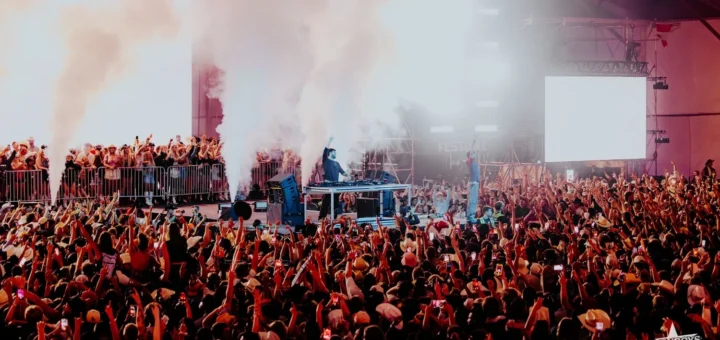
Cowboys Music Festival requested that the city reconsider the rules, with Penny Lane Entertainment President Paul Vickers told CBC that the decision could put 250 jobs at risk with the earlier cutoff.
Calgary Mayor Jeromy Farkas wrote on X and stated in an Instagram post that the city received complaints of windows and furniture shaking during last year’s festival and that no one would receive a “free pass” to disturb residents. Festivals, including Cowboys, were notified of this change months in advance.
“A great city backs major events and holds operators accountable,” he wrote.
However, that decision was met with provincial and federal scrutiny, as Alberta Premier Danielle Smith and leader of the Conservative Party, Pierre Poilievre, pushed back against the new regulations.
While Smith wrote on X that the “fun police” have returned to Alberta, Poilievre criticised “city hall gatekeepers” for “killing jobs” and “smothering country music culture.”
“The Mayor and Council should work with bylaw to reconsider these restrictions,” Smith wrote. “Find a solution that balances community concerns with the economic and cultural benefits these events bring to Calgary.”
Following the pushback from the Premier and Poilievre, Ward 1 Councillor Kim Tyers announced that she would be putting in a motion to allow weeknight concerts to end at 1 a.m. and reduce the maximum noise amount by 2.5 decibels. The motion ultimately failed.
The controversy took another turn as Country Thunder, an American country-focused music festival that has taken place in Calgary since 2016, announced it had decided to cancel the festival—two days before it was supposed to begin.
Executive director Kim Blevins wrote in a press release that it was “city-driven” conditions in Calgary that made hosting the festival impossible.
Additionally, in the release, the festival cited traffic reduction on 9th Avenue, a “last-minute” water line bypass pipe through festival grounds, and a loss of key site infrastructure. The decibel reduction was also cited as a “serious challenge.”
In an Instagram post on June 24, Farkas stated that Country Thunder threw the city “under the bus” and that the proposed rules would not impact them, as event staff told City News that their event ended at 11 p.m.
“Country Thunder was never part of the debate,” Farkas said in the Instagram video. “It’s crystal clear that Country Thunder made a business decision that cannot be blamed on the city noise rules.
Additionally, Farkas outlined that the weekend was predicted to receive rainfall before stating that he would not speculate on why the event was cancelled. According to Environment Canada, Calgary received between 18 and 20 mm of rain over June 27 and 28, during which the festival was expected to run.
Calgary Stampede is set to take place from July 3 until July 12, with previous years drawing in a record 1.4 million attendees.