
Remembering Catherine O’Hara
Emma Voelpel, Staff Writer
Comedy and acting legend Catherine O’Hara passed away in late January of this year.
O’Hara managed to shape Canadian humour through her work, bringing her roots and wit to the world stage. Now, she is being remembered as a trailblazer whose career spanned more than five decades, marking an influence felt far beyond the roles that made her a household name.
O’Hara’s comedy career began in the 1970s when she became part of the Toronto-based comedy sketch group Second City. The group moved from the stage to television in 1976 when Second City Television (SCTV) premiered.
The show, known for its sharp satire and eccentric characters, later moved production to Alberta’s own Edmonton in 1984. The move helped put an unexpected Canadian city on the comedy map, all the while showcasing the show’s creative talent to national and international audiences.
“I don’t think people take comedy seriously enough,” said O’Hara in an interview with Paul Soles on Canada After Dark in 1978. “With our show, people will come to me and go ‘you’re just as goofy in real life.’”
The run in Alberta was part of what many fans and comedy historians point to as a crucial era that helped launch several comedy legends from the show, including Martin Short, Rick Moranis, and John Candy.
Operating somewhat outside of the glare of Toronto and Los Angeles, it gave the cast and crew room to experiment. The prairie setting, far from the traditional entertainment capitals, became an unlikely hub for comedic innovation.
For O’Hara and her colleagues, the Edmonton years represented a uniquely Canadian approach to making television — resourceful, collaborative and unpretentious. The decision to move filming locations also underscored that world-class comedy could emerge from anywhere in the country. For local crews and aspiring performers, the presence of a hit series in Alberta showed that opportunity in the arts wasn’t confined to Central Canada.
SCTV went on to collect a multitude of awards during its run, including two Emmy Awards. In 2002, the show was inducted into the Canadian Walk of Fame.
More importantly, the show established how Canadian talent can find international success without losing their identity. As for O’Hara, her work on the series showed that Canadian humour — self-deprecating, sharp and delightful in parody — could resonate far beyond the border.
Her transition into film amplified that impact. In Hollywood, O’Hara delivered memorable performances in films such as Beetlejuice and Home Alone, where she often stole scenes with a raised eyebrow and perfectly timed lines.
“She was my pretend wife, my pretend nemesis, and my real life, true friend,” said Michael Keaton — O’Hara’s Beetlejuice costar — on a social media post. “This one hurts, man am I gonna miss her.”
Macaulay Culkin, O’Hara’s Home Alone co-star, also went to social media to share in the loss.
“Mama. I thought we had time. I wanted more. I wanted to sit in a chair next to you. I heard you. But I had so much more to say. I love you. I’ll see you later,” he wrote.
Yet even as she appeared in major studio productions, she remained closely associated with Canadian collaborators, including Eugene Levy and other SCTV alumni. Their enduring creative partnerships reinforced the idea that Canadian artists could build lasting careers together, rather than entirely dispersing into the U.S. system.
That collaborative spirit reached new heights decades later with the hit CBC comedy Schitt’s Creek. Created by Eugene and Dan Levy, the show cast O’Hara as Moira Rose, a flamboyant former soap star navigating life in a small rural town. With her strange accent and eccentric wigs, Moira became an instant icon. And O’Hara, already revered in the industry, found herself embraced by a new generation of fans.
Schitt’s Creek grew from modest Canadian beginnings into an international phenomenon, eventually sweeping the comedy section of the Emmy Awards in 2020. For many viewers outside of the True North, the show was an introduction into the depth of the country’s television talent. For those within it, the success felt like validation.

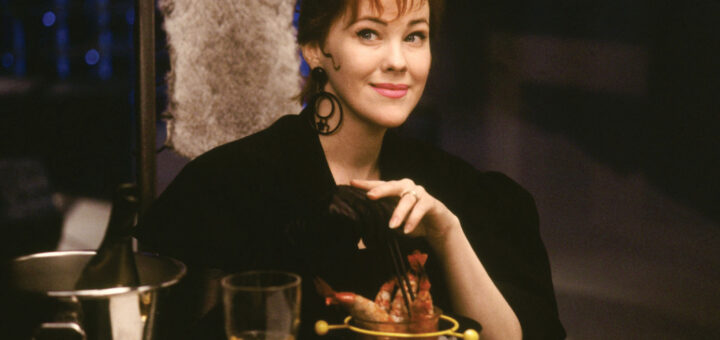
Known for roles in Beetlejuice, Schitt’s Creek and
Home Alone, Catherine O’Hara was a comedian and
trailblazing Canadian actress. Photo courtesy of
Instagram / @schittscreek
“We laugh at each other but we also laugh at ourselves,” O’Hara told the Guardian in 2020 when she was asked to define Canadian humour. “But the love in the show, that really comes from Danny and Eugene, because that’s the world Danny wants to live in, and so do I.”
O’Hara’s presence on the show gave it credibility and continuity — a bridge between the SCTV era and modern Canadian television. Her willingness to anchor a domestic production, rather than exclusively pursue U.S. entertainment, sent a powerful message to investing in Canadian stories.
Her legacy also intersects with how Canadian media is financed, distributed and celebrated. In the ‘70s and ‘80s, many Canadian performers felt like they needed to leave Canada to find longevity in their careers. O’Hara’s success proved that Canadian talent was just as needed in Canada as it is anywhere else.
By maintaining strong ties to Canadian productions, she helped contradict the theory that Canadians must abandon their turf in order to film for global acclaim.
As tributes continue to pour in, communities like Edmonton and Goodwood, Ont., where Schitt’s Creek filmed key scenes, are honouring the legacy of a Canadian whose laughter resonated around the world. The most notable tributes coming from the people that knew her most.
“Words seem inadequate to express the loss I feel today,” said Eugene Levy, O’Hara’s longtime collaborator, in a statement online. “I cherished our working relationship, but most of all our friendship. And I will miss her.”