
The veterans we left behind
Serena Kanji-Ramji, Photo Editor
Veterans hold a position of respect and honour in Canadian history and society, but does that extend to every veteran?
Indigenous veterans have fought on the front lines of every major conflict Canada has been involved in, but their contributions have seldom been recognised.
In the First World War, an estimated 4,000 Indigenous people served, and in the Second World War, that conscription number remained high, with again over 4,000 Indigenous people serving in the military.
The contribution to military service didn’t end there, though. Hundreds of these soldiers went back into conflict five years later during the Korean War.
The importance of these veterans to the Canadian struggle for liberty during the world wars, in particular, can’t be overstated.
Especially for the Cree code talkers.
A high-risk game of telephone
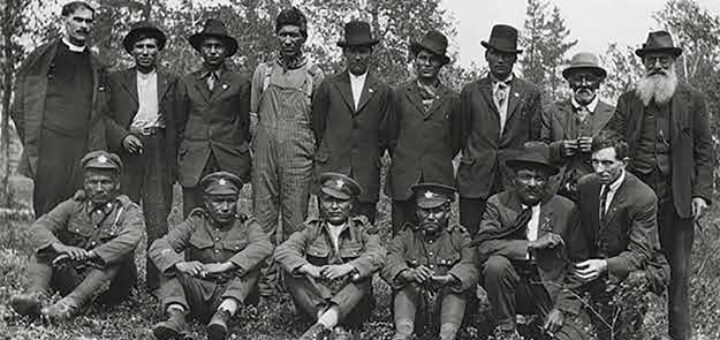
Code talkers were Indigenous soldiers who were stationed in England during the Second World War.
Those tapped to join the top-secret code talk mission were given the indispensable task of passing highly sensitive information back and forth in their native Indigenous language.
The operation was simple. A code talker would translate sensitive government communications into Cree, then another code talker would receive the information, translate it back into English, and relay the message to its recipient.
This method of information sharing proved secure and effective for the Allied powers because Indigenous languages were unfamiliar to enemy forces; if a message was intercepted, it couldn’t be translated or understood.
To this day, most code talkers remain unnamed, but one — Charles “Checker” Tomkins — wanted to ensure their contributions were recognised and their importance understood.
Tomkins originally hailed from northern Alberta, and later in life was a member of the Poundmaker’s Reserve in Saskatchewan.
Tomkins was sent to England in 1940 during the thick of the Second World War. He was assigned to the American Eighth Air Force and the Ninth Bomber Command unit.
After arriving in England, Tomkins was brought to the Canadian military headquarters. Neither he nor his commanding officer had any information regarding why he was called in.
Once there, he was paired with another Cree soldier from Saskatchewan. The pair were put into separate rooms with two telephones and asked to translate different words.
It is suspected that this exercise was used to help develop the dialect the Cree code talkers would use.
He was later asked whether he knew any other soldiers who spoke Cree.
Tomkins named six people who were also from Alberta.
They were then all brought together for the span of about a week so Tomkins could teach the others how to use Cree words for animals as code for military aircraft.
Cree code talker units were used from roughly 1940 to 1945.
Though Canadian code talkers were primarily Cree soldiers, they weren’t the only group of Indigenous peoples involved in this sort of operation.
There were units of Ojibwe, Navajo, Comanche and many more code talkers as well. The first recorded instance of a military using code talkers took place in 1918.
Navajo code talkers are the most well-documented unit, with their efforts even being memorialised in the Hollywood feature film Windtalkers.
Sacrifice doesn’t equal citizenship
Many of these army men returned as decorated veterans, recognised for their bravery on the battlefield.
For example, Charles Henry Byce from Moose Factory, Ontario, who was awarded the Distinguished Conduct Medal and Military Medal in the Second World War and Francis Pegahmagabow, who was one of the first Canadians to receive the Military Medal in the First World War.
However, accolades for Indigenous veterans were few and far between. In the piece she wrote about her uncle Charles Tomkins, Shirley Anderson recalled how he spoke about his treatment upon arriving home.
“No matter what an ‘Indian’ soldier did, somehow he was overlooked for promotions,” said Anderson.
It was only after many years of service that Tomkins was promoted to a Corporal.
Snubs for these homebound veterans didn’t stop at being overlooked for promotions.
Once back in Canada, they still were not able to vote, and the majority were denied access to veteran benefits their white counterparts received.
It was almost impossible for Indigenous veterans to borrow money for farmland or gain access to a loan-grant program that would have allowed them to set up their own businesses, even though it was a program offered specifically for veterans.
Why they enlisted
Even though these men faced discrimination from the country they fought to protect, there were an estimated 7,000 Indigenous soldiers in the First, Second, and Korean Wars.
Reasons for enlisting varied. Some joined the war effort because of patriotism or employment opportunities.
Others saw it as an opportunity to advance toward equality and full citizenship in Canada. Some hoped for better treatment on the reserves.
Persistence
Though history hasn’t been kind to Indigenous veterans, strides toward acknowledging their contribution have been made.
This year, Nov. 8 marks the 32nd Indigenous Veterans Day in Canada.
Today, it is estimated that Indigenous people make up over five per cent of the Canadian military and 5.2 per cent of veterans.
Additionally, at least 23 per cent of Canadian Rangers identify as Indigenous or Métis.
Throughout history and in the present day, Indigenous soldiers have had a profound impact on Canada’s military.
Their contributions cannot be erased or forgotten, and they leave a legacy unlike any other in the country’s history.
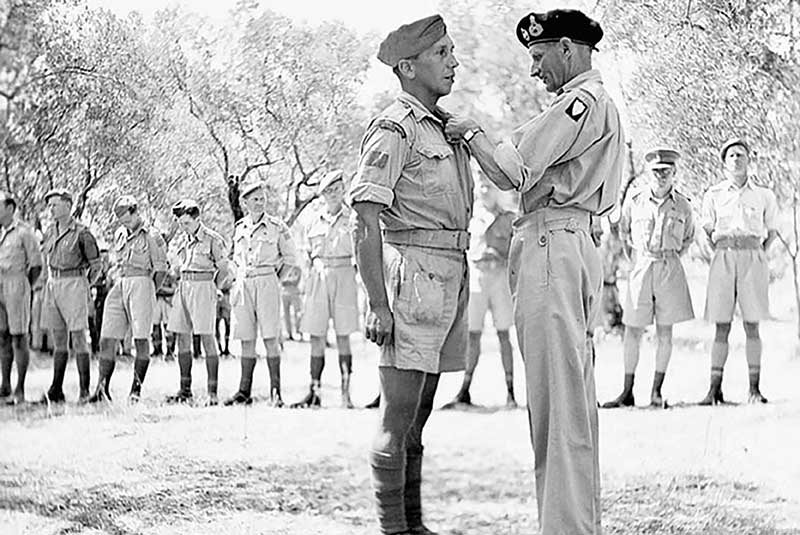
Huron Brant, an Indigenous soldier during the Second World
War, receiving his Military Medal in Italy. Photo courtesy of
Library and Archives Canada


