
The trajectory of film
Emma Voelpel, Contributor
Film is an industry that is constantly shifting. Recently, some say it’s shifting in the wrong direction, while others believe this shift could bring film full circle.
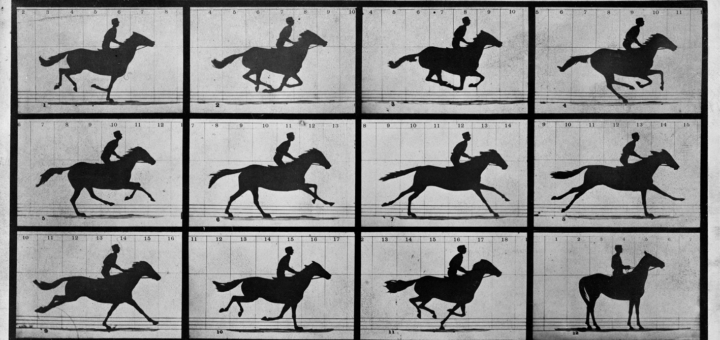
In 1878, Eadweard Muybridge introduced the concept of moving pictures with his sequence, The Horse in Motion. Since then, film has evolved into one of the most crucial forms of artistic expression and storytelling.
From horror to romance, it’s remained a medium that is meant to explore the human experience in all its facets and forms.
Movie theatres have long been a bastion for the sharing of long-form art, acting as a place with zero distractions. In the early days of moviegoing, people would dress in their Sunday best for a Saturday night at the newest moving picture.
However, in recent years, filmmaking and content creation has seen a massive shift.
With platforms such as TikTok, Instagram, and Facebook leading the way, shorter form content is at an all time high. In addition, in a post-pandemic era, the need for nostalgia in media is causing limited space for creativity, which gravely affects how the film industry operates and how audiences are consuming cinema.
Nonetheless, a club on the Mount Royal University (MRU) campus is hoping to help audiences appreciate just how important film is—the MRU Film Society.
The club had been disbanded two years ago, with English department liaison, Tamas Nagypal, recently resuscitating it.
“It creates a nice chill space for people,” says Film Society president Teresa Zell. “It also brings more awareness to films that maybe people haven’t seen before, which is cool.”
Deciding on their films as a collective, the club’s screening choices are based on what they think could ignite important discussions and enjoyment among peers.
Chase Norton, a treasurer for the club, remarked about this shift in short form content and how it’s affected how audiences engage and appreciate film.
”I don’t know if you’ve ever heard ‘it’s not that deep,’ but it’s a trigger phrase for me now,” says Norton. “I want people to think, ‘maybe it is that deep’ because it usually is.”
The saturation of quick videos results in shorter attention spans for users—especially younger generations—which takes away from the overall experience of watching and engaging with film.
This sudden drop in attention spans is what the club intends on fighting.
Since the pandemic, many feature length films are going directly to streaming. There’s been discussion about “second screen viewing.” It is a scenario where studios take into account how many viewers may have their film or television show on as background noise, which contributes to them simplifying their plots.
Along with this influx in short form content and second screen viewing, the film industry has also seen backlash for a lack in original ideas in the last few years.
In 2024, the top 10 highest grossing films in the world all fell under the category of sequel, remake, or adaptation. This was the first time there hadn’t been an original film on the list.
The amount of over-saturation in the media landscape also drowns out the films that do have unique concepts or original ideas.
Norton argued that the need for nostalgic content could be affecting the turnout at the box-office, as revisiting these stories provides comfort and are a safe bet for studios.
“Everything is scary as hell right now,” says Norton.
However, despite this disheartening dip in quality film, Nagypal explained how many people have shown support for local film festivals, with the Calgary International Film Festival selling out all their major events.
The moviegoing experience is also having somewhat of a comeback, with releases like the double feature of Barbenheimer—Oppenheimer and Barbie—in 2023. This was a revitalisation of the movie theatres post-pandemic, with people dressing in costumes and making an event out of going to the theatre.
Along with that, companies such as A24—a studio that has been valuable in uplifting upcoming filmmakers, have audiences becoming increasingly interested in independent films.
Zell explained this phenomenon by sharing how the fatigue of these overused cinematic formulas could result in audiences craving more original ideas.
“People are starting to get sick of the same formulaic movies,” says Zell. “Like, do we really need another Star Wars?”
Besides the ever changing media landscape, the club wants to appreciate film and filmmaking for what it is at its core—fun.
The club’s first screening of the year, The Lobster, had a large turnout of students eager to dissect and discuss the 2015 drama. The club’s vice-president, Dylan Armstrong, described how the screening in a group environment like that resulted in the audience using critical thinking when watching.
“Picking up on what other people found interesting or funny or shocking changed the way that I was taking in the film,” says Armstrong.
Continuing their monthly gatherings, the club wishes to make these observations about film and appreciate it more for the in-depth meanings.
As for the film industry itself and its 130 year history, it may shift back and forth between quantity over quality, but movies will always get people talking to each other and will always welcome audiences to the theatre.