New post-secondary legislation sparks debate
Lacey Holowaty, Staff Writer
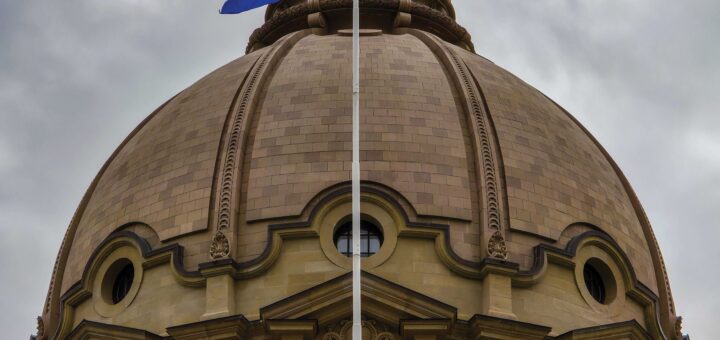
On Nov. 3, Bill 38 was introduced by UCP legislators. This bill proposes changes to the existing Post-Secondary Learning Act, as well as to topics such as tuition, institutional neutrality and student codes of conduct.
Minister of Advanced Education Myles McDougall, the primary sponsor of the bill, says the legislation is grounded in “common sense principles” and will promote “clarity” for prospective students regarding their tuition.
Bill 38, or The Advanced Education Statutes Amendment Act, was introduced in response to the 2025 Expert Panel on Post-Secondary Institution Funding and Alberta’s Competitiveness, which reported on the current state of Alberta’s post-secondary environment and proposed changes for improvement.
‘Clarity’ for tuition
Currently, Alberta’s post-secondary institutions set tuition limits within a ‘growth cap.’
At each institution, individual programs can increase their tuition by up to 10 per cent, as long as the average tuition increase across all programs of an institution remains at two per cent — which, according to McDougall, could introduce big differences in costs from program to program.
The proposed solution, through Bill 38, is to move towards minister-approved tuition maximums for specific programs.
During the bill’s second reading on Nov. 5, David Eggen, shadow minister for advanced education and NDP MLA, questioned the intent behind the legislation.
“He’s obviously moving this capacity and this power over to himself to increase tuition,” he stated.
Eggen highlighted that the expert panel report focused on increasing funding for post-secondary institutions and increasing spaces for incoming students — aspects not touched on by the UCP’s proposed legislation.
The neutral institution
During a press conference announcing Bill 38 on Nov. 3, most of the questions presented to McDougall centred around institutional neutrality.
According to the proposed legislation, it would be up to the institutions to manage their own neutrality policies while making sure students and faculty can freely express their opinions on political matters.
However, some felt the standards for neutrality were not clear in the legislation.
Photojournalist Leah Hennel called out the unclear definition during the conference, requesting further explanation on what a neutral environment would look like.
McDougall explained that while students and faculty are free to express their opinions on political matters, the institution itself would not be allowed to make any political statements.
“I would think that this is common sense in terms of how you would interpret that,” he said.
McDougall was also asked whether or not this legislation was a response to any specific event or recent occurrence.
“Well, it doesn’t take too much to look through what’s been going on in media and newspapers around the world, frankly,” he said.
However, he did not further specify any incidents that could have prompted the legislation.
Going forward
The status of Bill 38 remains unknown following the Nov. 3 reading, resulting in adjournment.
According to Eggen’s speech during the Bill’s second reading, the proposed legislation has allegedly been viewed as redundant in terms of solving issues within Alberta’s post-secondary institutions.