
Remembrance of hockey heroes
Katrina Ebuenga, Staff Writer
As the 2026-27 National Hockey League (NHL) season is well underway, fans may want to take some time ahead of Remembrance Day to remember players who paved the way for hockey to become such a significant sport for Canadians.
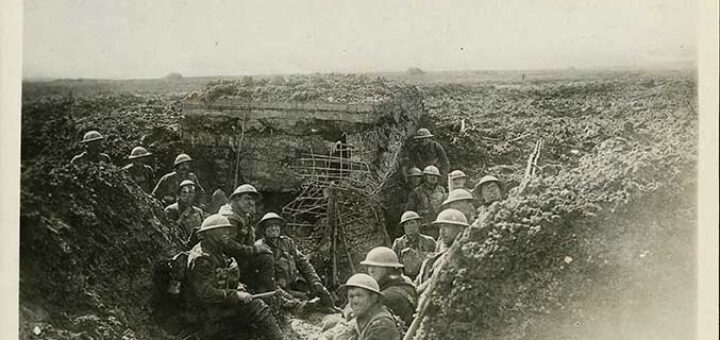
The long history of intertwined efforts of athletes competing on ice and fighting on the battlefield is notably present in the military hockey teams that were founded during the earlier years of the First World War.
Recreational games would be organised for military members, with the occasional game in which navy members played against the army.
During the First World War, many athletes had enlisted in the war due to their athletic skill levels that were, according to Ellen Bond of the Library and Archives Canada Blog, “desirable to the army.”
The need for more men on the front lines affected many teams across Canada, including the military team Winnipeg 61st Battalion, who played at a national league standing.
As the large number of enlisted men created a gap in hockey, women’s hockey became increasingly popular, allowing women to flourish in the hockey landscape.
Themes of hockey were used in enlistment posters, which further boosted morale, encouraging more players and men to join the military as it enacted a sense of patriarchy and duty to their nation.
Despite the unofficial count of hockey players who enlisted and served, their athletic war efforts took form in the memorial awards that were created to honour those who perished and had significant relations to the hockey world.
The significant role players had during the war materialised in memorial awards that attributed their efforts. Like the Abbott Memorial Cup, honouring Edward Lyman Abbott, the George Taylor Richardson Memorial Trophy, in honour of George Taylor Richardson and the Conn Smythe Trophy, named after Smythe to award to the NHL’s most valuable player.
Being inspired by the tragic loss of two cherished players—Allan “Scotty” Davidson and captain George Taylor Richardson—captain James Sutherland created a trophy to represent and honour all the fallen Canadians athletes at war. Sutherland, seen at the forefront in the hockey scene and on the field, encouraged men to enlist and support fellow Canadian troops.
The Memorial Cup, awarded annually to the champions of the Canadian Hockey League, was created to honour fallen athletes in Canada, with its first award given in 1919.
These tribute trophies symbolise the continued relationship between war and hockey history in Canada.
Hockey heroes
Allan “Scotty” Davidson was an exceptional young player during 1908-14, who moved to Alberta from Kingston, Ont. to play for the Calgary Athletics before heading back to Ontario and signing with the Toronto Blueshirts, now known as the Toronto Maple Leafs.
Davidson was the first professional hockey player to enlist in 1914 for the Canadian Expeditionary Force, where he travelled overseas to Europe to support Canadian troops.
Subsequently, hockey legend Conn Smythe played a major role in the earlier days of the Toronto Maple Leafs, after his time serving in the Canadian Artillery and the Royal Flying Corps. First enlisting with his teammates in Ypres, Belgium in 1915, he later received the Military Cross for acts of Valour in 1917.
In battle, he was shot down and held as a prisoner of war until later released once the war subsided. When he returned home, he became the principal owner of the Toronto Maple Leafs and their arena, Maple Leafs Gardens.
Despite being severely injured following Smythe’s re-enlistment in the Second World War, he continued to push forward and became a prominent coach of the Toronto Varsity Grads, leading to victory for the Allan Cup in 1927.
Additionally, major players in the game and on Canadian front lines are the Winnipeg Falcons, whose team had several players enlist in 1916. Devastatingly, two of their players, Frank “Buster” Thorsteinson and George Cumbers, perished in battle while the remaining men returned home in 1919.
In the months that followed the team’s reorganisation, they found themselves at the Allan Cup finals. Playing game after game in Belgium, the team won the first gold medal in ice hockey at the Antwerp Games in 1920, leaving their mark in hockey history.
Hockey has always been integrated within Canadian history, as well as in the homes of many across the country. The fast-paced sport has brought together communities and fostered a sense of nationalism for many.


