
Humour and war: The ‘memeification’ of conflict
Khaoula Choual, Staff Writer
Panem et circenses, or “bread and circuses,” a term coined by Roman poet and satirist named Juvenal, gestures to a superficial appeasement during ancient Rome: You give people bread and entertainment, then they are less likely to revolt.
However, in the 21st century, instead of being given grains and entertainment like gladiators, now there is an now infinite glitch of doom-scrolling. The general public is no longer just the audience. They have become the performers and the consumers. Everyone online has the means to create and react to all forms of media, from watching a dancing video and the next airstrike. What was once a hub for connection is now a portal of consumption.
Through wars like Ukraine and Russia, the capture of Venezuela’s President Nicolás Maduro, very recently, with the U.S.-Israeli bombing on Feb. 28 against Iran, memes are used to lighten political headlines.
Hundreds of posts that went viral, captioned “My First World War, kind of nervous,” or “the world when it’s my turn to be an adult.” “Gen Z is so unserious” with the background audio of Kesha’s song “Blow.”
These posts have garnered mixed reactions. On one hand, there are positive reactions, and content going viral. On the other hand, there have been users who call out these posts with other counterattacks of videos, calling people privileged, and war is not a laughing matter.
A lot of Gen Z grew up with social media, and it’s how most process their surroundings. In times of crisis, Gen Z seems to cope through the use of memes on social media. From the pandemic to constant threats of a global war, it seems easier to reframe anxiety as a laughing matter.
Memes to promote war
Gen Z aside, governments are not shy of using meme culture in politics. The U.S., for instance, through its social media accounts, is transforming the strikes in Iran into memes.
The TikTok page for the White House has taken to mixing real-life airstrikes with clips from various movies and video games. One video was a mixture of clips from Call of Duty and unclassified missile footage from U.S. Central Command, accompanied by a caption that read “stay frosty.”
Another TikTok the White House posted shows mixed clips from Grand Theft Auto (GTA) and a real-life airstrike. The White House utlised popular GTA clips that have been used in memes before, like the “Wasted” sound, which occurs in the game when the player dies or fails their mission.
The White House’s implementation of meme-style videos seems to be aimed at promoting and gaining positive responses in the war in the Middle East.
James Glassman, a communications expert who served as under secretary of state for diplomacy and public affairs in the former Republican Bush administration, told The Detroit News that the government seems to be trying to sell war as cool, and they’re doing so by making it look like a video game.
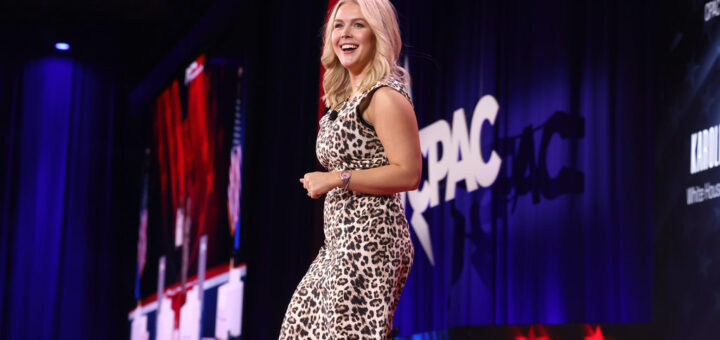
Some people even praised the posts, like White House Press Secretary Karoline Leavitt.
“This is another example of our non-traditional and traditional media strategy, which has proven highly successful,” she said. “Over the past few days, the White House videos have generated more than two billion impressions. People are talking about the tremendous success of the war and the U.S. military’s obliteration of Iranian terrorists — and that’s exactly the point.”
Others condemned the post, like actor Ben Stiller, whose movie Tropic Thunder was featured in the “Justice the American way” video.
He wrote on X, “We never gave you permission and have no interest in being a part of your propaganda machine. War is not a movie.”
Roger Stahl, a professor who studies war and media at the University of Georgia, said that the videos implemented by the Trump administration, using pop culture will rally support and mitigate the human cost of war.
“They’re using this really stylised, hyped-up imagery to build up this aesthetic of bloodlust … and turn war and military matters into entertainment,” Stahl said to the Washington Post. They’re giving Americans the “empathy-free … Hollywood, video game version of warfare” to distance the public “from the realities of what makes them uncomfortable.”
From ancient Rome of bread and circuses to Gen Z and modern governments, memes have a way of mixing military matters into entertainment, then turning it into a spectacle. Meme culture continues its attempt to desensitise the public away from political and military realities, further diverting attention from societal issues.