
Fashion politics and the price tag on trends
Aydin Atush, Contributor
Have you ever considered that what you wear every day is a socioeconomic statement?
Well, fashion trends often fluctuate due to economic and political changes, causing consumer habits to evolve over time.
Mainstream clothing trends, hemlines, shoes, hair and silhouettes are replaced when a shift in the economy occurs, which directly reflects the political landscape’s impact on everyday consumers.
Post World War I fashion
The 1920s were a decade of economic growth and vital innovation that changed consumer tastes. It may not seem as though the development of automobiles would impact the fashion world—but you would be surprised.
Produced from 1908 to 1927, Henry Ford’s Ford Model T was revolutionary for its accessibility and affordability for middle-class Americans.
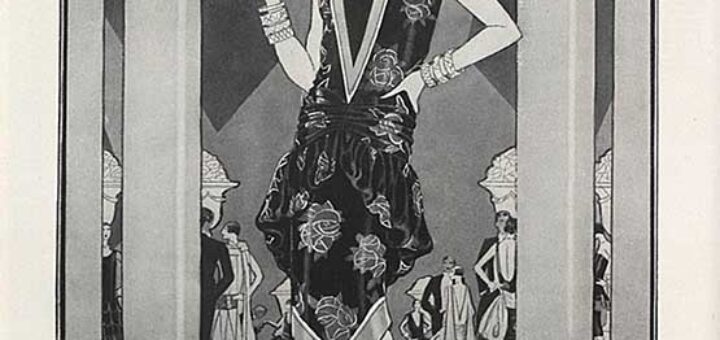
This new technology inspired roaring 1920s fashion, including Coco Chanel’s long-sleeved, drop-waist little black dress called “The Chanel Ford,” which was featured in Vogue magazine in 1926.
Other characteristics of 1920s fashion included short, sleek bobs and short hemlines that upended the strict floor-length skirts popularised in the 1910s.
Art Deco also became a staple of the period, and the movement acted as a direct reaction to post-WWI traditionalism. The Art Deco style was characterised by its liberating geometric shapes, which were particularly inspired by Ancient Egyptian and African architecture.
World War I, which had seen heavy repercussions for everyday civilians, cost the United States $32 billion dollars—approximately 52 per cent of the gross national product.
The economic boom following the war, however, encouraged a wage increase for middle-class Americans, popularising disposable income and allowing average Americans to consume more often.
Clothing also became significantly cheaper with the introduction of fake silk, also known as rayon, which was popular with clothing manufacturers because it required only 2-3 meters of fabric.
Styles therefore began to adapt, with the common silhouette moving from a strict hourglass shape of the 1910s to a square, more relaxed boxy shape.
Fashion ultimately took on a more unrestricted and expressive style compared to the traditional styles of the previous decade.
History and hemlines
The “Hemline Index” is an economic theory that uses the length of women’s skirts to indicate the state of the economy.
When the economy is doing well, hemlines increase, and the mainstream experiences much shorter skirts.
On the other hand, an economic downturn results in skirts being much closer to the ground.
Although this economic indicator is heavily debated by economists, research shows that fashion retailers can utilise national GDP forecasts to strategically introduce certain products.
In times of economic prosperity, retailers may introduce more expressive, colourful clothing styles, whereas in economic downturns they may introduce more muted, traditional styles.
The index is also debated as a possible tool for determining if an economic recession is approaching. Fashion is largely culturally driven, and trends can serve as socioeconomic indicators when popular styles shift from bolder to more muted ones.
A great example of this is the introduction of over-the-knee skirts in the 1960s, which eventually evolved into the miniskirt.
The 1960s were also a period of economic growth, with an increase in employment and consumer spending. Consumers, with more disposable income and the influence of growing social movements, were the main drivers of hemline increases.
Although the accuracy of the “Hemline Index” is disputed, the correlations between the economy and mainstream fashion trends are nonetheless evident in retrospect.
Well, what now?
The fashion industry has changed significantly in the last few decades, and the economy’s impact on it has shifted too.
Economic uncertainty is becoming more prominent, with Canadian unemployment rising to 6.5 per cent this month and a greater need for recovery following the 2025 U.S. tariffs.
Consumer confidence is in a sharp downturn as a result, which impacts the fashion industry and emerging consumer trends.
In 2025, minimalism made a comeback, but fashion trends for late 2026 are moving toward maximalism, with an abundance of texture, patterns, distinct silhouettes, and a focus on longevity.
A popular skirt choice is the midi skirt, which sits right about the knee, offering a timeless, even classical appeal. The midi skirt trend speaks most to longevity, as it is an item that can be paired with anything you already have and remain part of your rotation for a long time.
This need for longevity in fashion is further rooted in economic uncertainty and in seeking stability through clothing choices.
The current fashion fads revolve around intricate beading and textures, which promote individuality as a sign of financial unrest.
Pieces made with intention and higher-quality materials are increasingly sought after, as personal expression for building a long-lasting closet becomes more desirable.
While periods of economic downturn often bring forth traditional fashion styles, there is a current push for individual expression and maximalism unlike historical patterns.
These trends ask us if this is a permanent cultural shift, or a mark of the consumer influence that continues to alter the fabric of the cycles we see over and over again.


