
Sense of community sparked amidst referendum confusion
Jarod Lechadores, Contributor
On Sept. 22, NDP MLA Lizette Tejada hosted a town hall at the Winston Heights Mountview Community Association for interested citizens to discuss the Oct. 19 referendum.
At the town hall, many expressed concerns about the complex wording and people being unable to answer the questions on the ballot.
Annie Wong, a member of Chinese Canadian Connections, a community-led organisation designed to increase Chinese civic participation in Alberta, expressed her frustration with the phrasing of the referendum questions.
“The 10 questions on this referendum are so complicated that non-English speakers do not understand how to answer the questions,” says Wong.
To address this issue, town hall attendees were given a document that breaks down the meaning of each question.
Tejada says these explainer cards are necessary to help voters understand exactly what the referendum is and how the process works.
“People are asking a lot about the mechanics of voting, how they’ll vote and what each of the questions means,” Tejada says. “They’re asking a lot about the process and worried that their answers won’t be validated.”
Daniel Smelsky, a University of Calgary student from Ontario, expressed his concerns about question two, which addresses the ability of non-permanent residents to access social services such as healthcare.
“I wonder how that would carry over for someone coming from Ontario,” Smelsky says. “And how this would affect others that have either come from different countries or other provinces.”
Despite these concerns, Smelsky is hoping to become a permanent resident of Alberta in the near future.
There were two voices in the crowd who shared the separatist sentiment.
A pair who identified as “Al Bertan” and “Vicky Bertan” shared their thoughts on why they believe voting option two is necessary to address issues in Canada.
“Everything needs to be blown up and redone.” Al Bertan says. “We have no choice but to vote to separate, and that will open up the constitution so we can actually have a conversation about fixing Canada.”
Vicky Bertan added that she doesn’t feel that there should be concerns around the referendum.
“I don’t understand the fear around a simple question. This is a question of should we actually sit down, do we have problems that we need to look at and fix?” She says.
A similar opinion is also shared by UCP MLA Jason Stephen.
“My reason for preferring Option two, which I have had that position for a long time, is I would love nothing more than for Canada to fix itself,” Stephan told CBC News. “Currently we do not see that happening.”
Despite the frustrations and fears around the referendum, Albertans have managed to find silver linings within this difficult time.
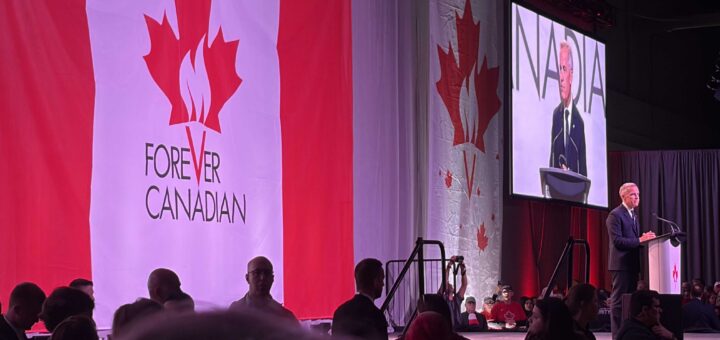
Gordan Ross, a veteran Forever Canadian volunteer, says getting out to gather signatures has had a positive impact on his social life.
“I was kind of an introvert…my girlfriend has said this [volunteering] has turned me into an extrovert over the past 16 months,” Ross says.
Additionally, Tejada highlighted the community-building she’s seen throughout the process.
“We have a lot of people who want to help, who want to be well informed because they want to help others in this process,” she says. “People are doing their civic duty…lots of people doing information sessions, doing them in different languages and getting as many people as informed and motivated to get out there and vote.”
Akshat Jaswal, a recent Mount Royal University graduate, echoes this passion for civic duty by taking a gap year from his studies and cites the referendum as a core motivator for that decision.
“For a while, I wanted to go straight into law school, but when I heard this referendum was coming up…and I saw that people weren’t taking it seriously, I thought it would be a great opportunity to stay back home,” says Jaswal.
In a Calgary Herald article, Doug Griffiths, chief executive of the Edmonton Chamber of Commerce and a former Alberta cabinet minister, noted his concerns with referendum talks during this politically confusing time.
“Just having these conversations is chilling the brand, the story, the reputation and the potential of this province, by distracting us from what’s really important,” Griffiths says.
The Reflector reached out to the UCP for comment, but did not receive a response.


