
They’re always watching
Serena Kanji-Ramji, Photo Editor
In 2026, it is easier than ever to keep a pulse on what’s going on in the world at large. Instagram, Snapchat, and TikTok are just a few platforms with a constant flow of evolving content on a diverse range of topics.
The benefits of these platforms seem endless. Individuals can keep in touch with their friends and family, stay up to date with current events, or even just watch cat videos. On the flip side, on these apps, anything and everything can become content.
In recent years, there has been a massive surge of “influencers” recording people they don’t know, or who have not consented to being recorded in public places.
Dance like everyone’s watching
In his article for The Guardian, journalist Jason Okundaye recounts the time he caught a stranger filming him dancing in public.
“The video never surfaced online to my knowledge – perhaps he simply sent it to a group chat – but for months I looked over my shoulder when dancing, ” Okundaye says.
Okundaye also chronicles another similar incident with 64-year-old Michael Peacock, who was filmed dancing at the nightclub fabric in London. However, unlike Okundaye’s video, which was likely never uploaded, Peacock’s was.
The video was uploaded accompanied by the caption “Yo I’ll never be going Fabric again.” The wave of hate that followed was swift and brutal, with Twitter users being both homophobic and ageist.
When asked about the incident, Peacock described his heart sinking as he watched the video of himself on Twitter.
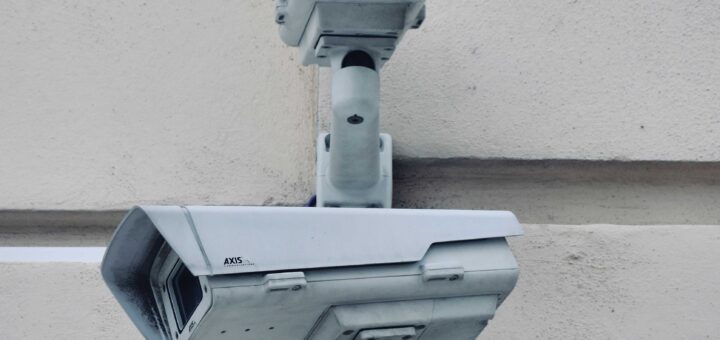
Has the internet become a tool of surveillance?
It’s easier now than ever to record something, with cameras built into our phones, and it only takes a single click to upload it to the internet.
Innocent bystanders being recorded aren’t the only victims of surveillance culture.
An individual’s own identity is more affected by this phenomenon than they might realise. An article from Brock University further describes the issue, discussing how being watched changes the way we see ourselves. When people are aware of the fact that they are being watched, they become more restrained in the way they present themselves and are overall more self-conscious
The article explains that surveillance culture is creating fear among youth about what happens if they don’t present as perfect all the time. Sometimes that fear becomes paralysing.
Sharina Cheng, a student at Mount Royal and former influencer, says that during the time she was creating content, she felt pressure to always be perfect for the cameras.
“When I was doing content creation, I did care a lot about what people thought about me, and I really disliked that,” she says. “I always wanted every reel to be, like, picture perfect, and I’ve had one type; I felt like I was a bad person, or I wasn’t good enough”.
When talking about why she stepped back from social media, she also cited feeling surveilled. “It did make me feel like everybody was watching me. Like, I felt like when I was in school, people looked at me more, ’cause I was making content about MRU,” she says.
Now, with the release of the new and improved Meta glasses, there is always a possibility that someone is watching you.
The Meta glasses of it all
Since the September 2021 release of Ray-Ban Stories, the company’s first generation of smart glasses, Meta has been making strides towards developing wearable, discreet recording technology.
However, Meta’s newest smart glasses release in March 2026 has garnered its share of criticism. Dubbed ‘pervert glasses’ by some internet users, there have been massive privacy concerns.
In an interview with the BBC, David Kessler, an attorney who is at the forefront of the US privacy practice at Norton Rose Fulbright, shared his concerns with this new technology.
“There are some pretty dark places we could go here,” says Kessler. “I’m not anti-technology in any sense, but as a societal matter…will I need to think [of being recorded] anytime I go out in public?”
This is a shared notion amongst most people who encounter Meta glasses in the wild. Some even go as far as expressing their distaste for the glasses by breaking them.
Last December, a Tik Toker known as @eth8n_____ claimed that he was assaulted unprovoked by a woman on the New York subway who broke his Meta glasses. The viral video showed Ethan holding his broken glasses, talking about getting insurance while bystanders laughed.
In a video shared later, Ethan provided context, sharing that he was using the glasses to record a video where he was making what he described as “sound that I and others thought was hilarious for a video to post”. He went on to claim that the reaction was unprovoked.
While the context video was made to garner sympathy for Ethan it unintended effect was cementing the woman in his video as an online folk hero, with commenters under the video showing support for the woman.
“I hope she called him a dork for wearing them before she broke them,” a user commented.
“Imagine being this based, gorgeous, tall, and cool,” another user replied.
In response to the woman breaking the glasses, Ethan filed a claim with the police that would result in a misdemeanour charge if the woman was identified.
It is safe to say that in our current reality, surveillance culture won’t be a problem tackled overnight. However, with enough pushback, anything can change. So if people don’t like being constantly watched, maybe one day they’ll turn off their recording devices too.