MRU looks back on 2016
Anais Loeppky, Web Editor
This year, we have seen 2016 make a comeback stronger than a ’90s trend.
There has always been a bit of a 10-year microcycle in trends. What was once considered outdated suddenly becomes cool again once enough time has passed.
But 2016 seems to be having a particularly strong moment.
From songs like Zara Larsson’s “Midnight Sun” finding their way back into the spotlight to the return of the infamous Unicorn Frappuccino, we seem to be fully committed to curating the perfect 2016 vibe.
On Tuesday, Sept. 8, The Reflector asked more than 50 students at Mount Royal University about what they miss most about 2016.
Students were excited to talk about it, and the most common thread was social media.
Bring back casual posting
The nonchalant use of social media in 2016 was a prominent topic of conversation.
Students remembered a time when Instagram felt more like a scrapbook than a formal résumé.
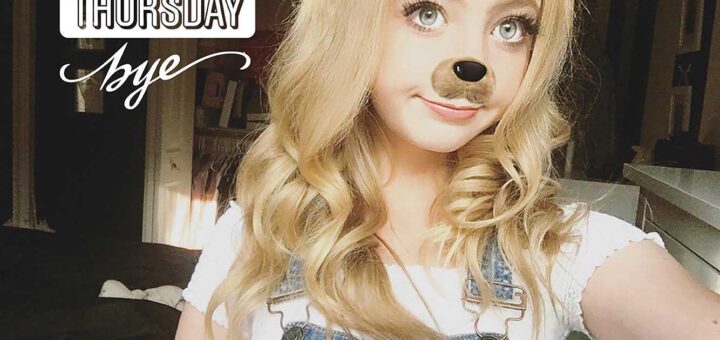
Posting a picture of your morning coffee or a selfie with the classic puppy dog filter did not require a carefully curated feed or a 30-minute debate over whether the photo was ‘on brand.’
“I miss when Instagram was almost conversational, rather than this heavily curated platform it is now,” said one student.
Today, social media is widely accepted as far from realistic. We have become accustomed to carefully edited photos, sponsored posts, and algorithms that somehow know exactly what will make us stop scrolling.
In 2016, things felt a little more chaotic. But what feels like chaos in hindsight was truly just authenticity.
The shameless use of Snapchat filters and the willingness to post something simply because you thought it was funny all contributed to a version of social media that felt more collective and lighthearted.
When social media was social
Something students often mentioned was Pokémon GO.
The 2016 mobile game became a cultural phenomenon almost overnight, sending people into parks, neighbourhoods and public spaces in search of virtual Pokémon.
“It was so groundbreaking for its time,” says one student. “It’s the only video game I can think of that brought people together to such an extreme degree, literally flocks of people walking around together.”
Pokémon GO is seeing record numbers since its original popularity in 2016.
The game has continued to generate billions in revenue since its launch, with the player base growing by over 7 per cent in a single month recently, adding over 2.3 million brand-new or returning users.
Students also brought up the seemingly endless stream of viral challenges that took over the internet, most notably the Mannequin Challenge. The internet was full of these sorts of challenges, where people would flip water bottles and do the Running Man.
“It was so different because social media was actually physically bringing people together,” a student explained.
The soundtrack of 2016
Students described the sound of 2016 as being entirely its own era.
“Something about that trashy house music was actually addictive,” one student said.
There was something different about music culture in 2016. Songs could become massive shared cultural moments, with people hearing the same tracks everywhere.
Whether you were at the grocery store or a house party, you were bound to hear the likes of The Chainsmokers, Drake, or Sia.
Today, our music consumption is increasingly personalised. Streaming apps know exactly what we listen to, and TikTok knows which 15 seconds of a song we like.
Algorithms decide what gets pushed onto our screens.
Our advanced algorithms have made it easier to discover music that is more specific to our interests. They have also helped us find smaller up-and-coming artists who may have otherwise gone unnoticed. However, this has also made many music communities more niche than they were before.
In 2016, it felt like everyone was listening to the same songs.
Maybe that collectiveness is part of the nostalgia.
Before everything got weird
When students were asked why they think people are so nostalgic for 2016 right now, another theme came up time and time again: it was directly before the world took a chaotic turn.
2016 was pre-COVID. It was pre-AI. It was before the world got so serious.
Perhaps this is simply a generational perspective, since Gen Z was experiencing their early teens in 2016.
For many people, it also represents a period before the political and social divisions of the late 2010s and early 2020s became so pronounced.
The world was not perfect in 2016. There were plenty of problems, and nostalgia has a funny way of giving the past a rose-coloured filter.
But the difference is that — looking back from 2026 — 2016 can feel like the calm before the storm.
Technology alone has evolved an insane amount in the last decade. Our algorithms now know us better than some of our own friends. We are constantly being recommended content specifically designed to appeal to us, from the music we listen to and the products we buy to the opinions we are exposed to.
Before this, people were all being shown many of the same memes, videos, and trends. That meant that when something went viral, it actually felt viral.
And then there is the extreme extent to which AI has changed everything.
2016 was a time before AI-generated videos, AI-written captions, and the increasingly unavoidable ‘AI slop’ that seems to find its way onto our feeds every day.
Maybe people miss the chokers and Pokémon GO. Maybe some even miss the Unicorn Frappuccino. Maybe some are fine leaving that particular trend in 2016.
But arguably the best part of seeing 2016 come back is getting to bring a little bit of its fancifulness with us.
This 2016 revival truly seems to be people taking the parts we loved most and giving them a new life in 2026.


