
Smith’s proposed referendum leaves temporary immigrants’ future in the hands of Albertans

Karra Smith, Staff Writer
Many of Alberta’s temporary residents are currently left in limbo, with their future access to social systems being left in the hands of other Albertans and Premier Danielle Smith’s government.
Come Oct. 19 of this year, residents across the province will have the opportunity to respond to Smith’s five-question ballot, which asks whether temporary residents should be allowed to access provincially funded systems, such as education, healthcare and social services.
Although one driving point for the referendum is regaining economic stability in the province, many are wondering how effective these results may be, given that the most recent data collected by Statistics Canada show that non-permanent residents only make up about 5.5 per cent of Alberta’s population.
With the referendum looming, not all experts agree with the reasoning behind the ballot. Dr. Rachel Talavlikar, physician and director at the Calgary Refugee Health Clinic, isn’t convinced the issue is so black-and-white.
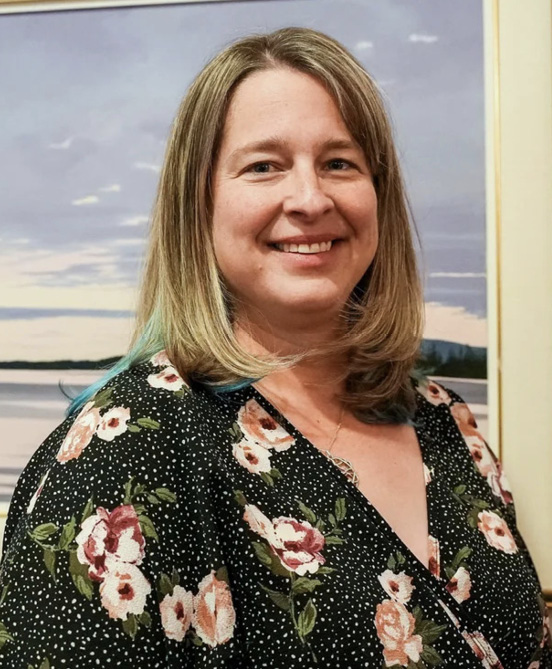
Dr. Rachel Talavlikar works as a medical director and family medicine specialist at the Calgary Refugee Health Society. Photo courtesy of /calgaryrefugeehealth.org
“I find it’s a very unfortunate approach to regulate costs and sort of manage the budget because it’s sort of asking or putting questions out to people around whether or not people should have access to social services based on immigration status, it’s actually quite a complex system,” says Talavlikar.
Smith says individuals in the province temporarily should be treated as “tourists” and permanent citizens should take priority.
“This is what we’re talking about — making sure the services are prioritised to the people who’ve registered a permanent stake in our country and our province,” Smith told reporters.
However, Talavlikar questions how many temporary citizens are connecting with these systems.
“But the reality is the amount of services that those people actually, likely access during that period of time is often quite small,” Talavlikar says.
And she is not the only one questioning the referendum.
Péter Szigeti, an associate professor in the faculty of law at the University of Alberta—with a speciality in immigration—says when it comes to profit for the province, he’s not totally optimistic with the policy’s logistics.
“Whether this is a real and substantial way of saving costs for either Alberta or Canada, really, I have my doubts,” he says.
Szigeti says that as of right now, both the federal and provincial governments have concurrent powers over immigration—a notion many Albertans think should change.
According to a poll done by Leger, 63 per cent of Albertans were in favour of Smith’s idea of more provincial control over immigration. The national average from this poll was 65 per cent of Canadians agreeing with Smith’s desire for more provincial control over immigration.
While Talavlikar says the “false dichotomies” created by this proposal could be very dangerous, others are calling the entire referendum blatantly prejudiced.
“The level of racism and hate that has been expressed has risen, undoubtedly, and it is aligned with this premier’s attempt to pin all of her failings on newcomers to this province,” NDP’s Rakhi Pancholi told the press.
While tensions continue to rise over the state of temporary immigrants’ position within the province, the outcome of the referendum will not be known until after ballots are cast on Oct. 19.


