
How Muslims Stay Competitive During Ramadan
Serena Kanji-Ramji, Staff Writer
Finding balance as an athlete is a challenge in itself, but what happens when you throw faith into the mix? Every year, Muslim athletes have to find a way to maintain their competitive edge while taking their personal beliefs into account.
During the ninth month of the Islamic calendar, Muslims all over the world observe Ramadan. This is the month it is believed the Quran was first revealed. For Muslims, this time is for deepening spiritual practice— dedicated to community and prayer. The most notable aspect of Ramadan is fasting.
The Muslim calendar follows the moon’s cycle, meaning Ramadan takes place during a different month every year, altering fasting times accordingly. However, the fasting perimeters remain the same. No food or water from sunrise to sunset.
When the sun does set, Muslims break their fast with a special prayer and meal called iftar. It’s common that during this month, most Muslims slow down in their daily routines, but most athletes don’t have that option.
Improvise. Adapt. Overcome.
Staying competitive is essential, and the alternatives to train or compete after iftar are limited. How every athlete adjusts comes down to individual preference. In his interview with Men’s Health, British basketball league player Radwan Bakkali dove into how Ramadan affects his training routine.
“When your body is not focusing on digesting food, you have all that energy to just focus on what you’re actually doing. I find I feel more dialled in — more efficient,” he explained.
Bakkali went on to explain in his interview that he’s been playing sports for so long now that the annual fasting has become integrated into his life.
“I’ve been practicing fasting since I was 7 years old, and I’ve always been a very sporty person. I’m now at a point where it doesn’t impact me too much.”
Fasting off the court, feasting on it
While it seems improbable that abstaining from food and water wouldn’t severely affect competitive performance, sleep specialist Dr. Qanta Ahmed breaks down how it’s possible. He explained that athletes who are fasting during Ramadan are able to “adjust because once they’ve established a routine, which included the sleep, changing the calories and of course, the limited hydration … most of the shock to their system would be in the first week.”
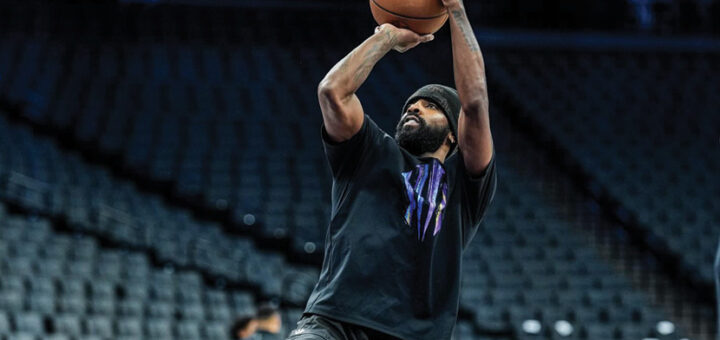
Even with that adjustment period, many of these athletes continue to play at elite levels without waiver and continue to be top of their game. In 2022 NBA player Kyrie Irving — currently with the Dallas Mavericks but playing for the Brooklyn Nets at the time –– dropped 39 points, five rebounds and six assists in the first game of the playoffs during Ramadan.
Irving isn’t the only one either. Enes Kanter Freedom, formerly of the Boston Celtics, played the 2019 playoffs, part of which overlapped with Ramadan. When reflecting on the experience, Freedom said, “I want to be an example for children everywhere, showing them that you can thrive when challenged — fasting for Ramadan, for instance, but also going all out in the NBA playoffs”.
Cougars fast, too
Closer to home, the Mount Royal University Cougars have Muslims athletes present on many of the teams. Like Reem Saif, a first-year student enrolled in the Health and Physical Education program. Saif is also a middle blocker for the women’s volleyball team, and the only person to wear a hijab on any of the university’s teams.
When talking about her place on the team, Saif is proud of all she’s achieved and feels honoured to represent her culture on the volleyball court.
“I worked my butt off trying to get this spot on this team,” she said. “I never thought about it, as in, like, I need to work extra hard, because I’m a Muslim or I openly show myself as a muslim by wearing the hijab and everything, but it’s been such an honour.”
Since the women’s volleyball season came to an end in early February, the team has been on a 3-week break that overlapped with the beginning of Ramadan. Heading back into the regularly programmed practices and workouts, Saif already has an idea about how she’s going to handle it.
“I’m gonna have to talk to my coach about it, because the intensity of having to lift and practice back to back to back is a little hard for me, and I’ll just have to find out about myself,” she said. “I haven’t started, but I have a game plan of how I’m gonna do it. Maybe limiting my practises, the volume, like timing, or, intensity of practice.”
Still, Saif knows that whatever the circumstances, the MRU coaching staff will have her back.
“I’m so glad the coaching staff and all the varsity athletic staff don’t look at me as someone different, while they’re just another person that they get to work on,” Saif said. “The hijab doesn’t affect them, whether I follow what I believe and doesn’t affect how they treat me, which is amazing.”
With more Muslims making names for themselves in the sports world, understanding and respecting global traditions is as relevant as ever. Never count these athletes out of the narrative –– even during Ramadan.


