
Calgary hosts Canada’s first Sumo Fest
Julia Finot, Staff Writer
“San, ni, ichi.” In Japanese, it means three, two, one — the countdown before two sumo wrestlers charge at each other. Now, the centuries-old spectacle of sumo wrestling has landed in Canada, bringing a one-of-a-kind spectacle to Calgary.
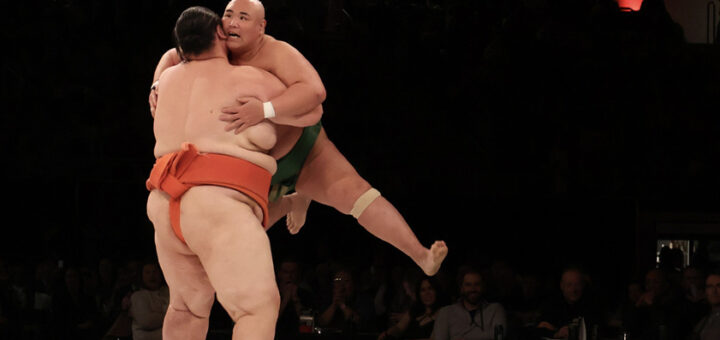
Sumo Fest is Canada’s first professional sumo wrestling festival. Held March 13 and 14 at the Nutrien Western Events Centre in Calgary, the event featured live sumo matches, a market and a showcase on Japanese culture.
After touring more than 40 countries, the travelling sumo showcase is now bringing the ancient sport to Canadian audiences.
The sport dates back more than 1,500 years to Japan, where it began as a Shinto ritual meant to entertain the gods. Ancient Japanese communities believed that entertaining matches would ensure a successful harvest.
What began as a sacred ritual has evolved into a globally recognised sport. While most wrestlers are Japanese, the sport has gradually begun allowing foreign competitors in tournaments.
Embracing the spectacle
Sumo wrestling is slowly gaining popularity in Canada. While there have been few professionals from Canada, viewership is rising as people become more intrigued with the sport.
“It’s something we have never seen before,” said friends Kiki and Mackenzie. “The wrestling looks like it’s going to be super fun.”
One of the most unique aspects of sumo wrestling is the absence of weight classes. The sport relies on explosive power, balance and raw strength.
Sumo wrestlers look different from most professional athletes. Wrestlers are known for their massive physiques and wear a traditional mawashi belt.
On average, sumo wrestlers stand at six feet tall and weigh around 320 pounds.
“It’s different from the other [sports] because they move slow,” said sumo fan Joanne. “How are they going to grapple one another, right?”
In partnership with the Calgary Japanese Community Association, Sumo Fest also featured many locally owned Japanese businesses. From jewelry makers to florists, Sumo Fest was a true celebration of Japanese culture.
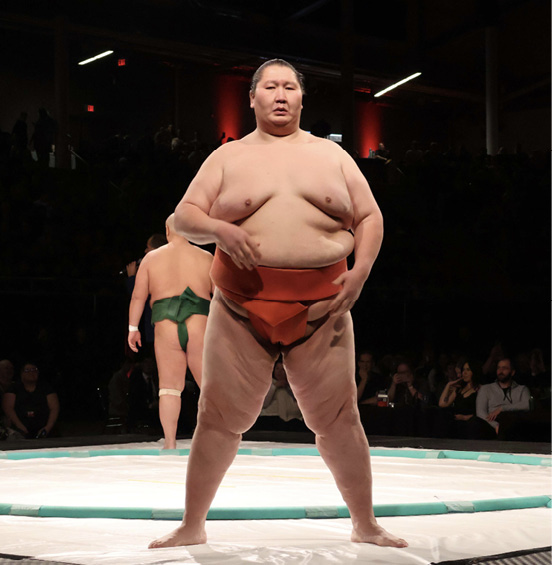
Sumo wrestlers can weigh anywhere from 265 to
over 440 pounds, with the heaviest of all time, Orora
Satoshi, weighing nearly 700 pounds! Photo taken by Ava Morrison
A combined 1,970 pounds
The Nutrien Western Events Centre was sold out for the first night of competition. Spectators from all over the city came together to get a glimpse into Japanese culture and live sumo wrestling.
“The fact that I get to see sumo wrestlers actually take on one another is pretty cool,” said vendor Spencer Tulloch. “To be honest, I’m really stoked for 580 pounds to take on 570 pounds.”
The event featured four athletes. They are all world champion sumo wrestlers, with each having over 15 years of professional experience.
The first wrestler introduced was Waka. Standing at six feet and weighing 330 pounds, he was the smallest athlete of the night. He is known as the ‘little guy.’
Then there was six-foot-four, 530 pound Ramy. He is a rare type of wrestler, hailing from Egypt. He said he started wrestling simply to try a new sport. Because he is not Japanese, it is harder for him to compete professionally, as there is a cap on the number of foreigners allowed to compete in events.
Next was Hiroki. He is recognised as the heaviest active sumo wrestler in the world. He also stands at six-foot-four, but he weighs an astounding 570 pounds. Hiroki was the most playful entertainer of the evening. From blowing kisses to drinking beer with fans, he showed off his giant personality.
Last to come out was one of the most decorated wrestlers in recent history, Ichi. He is known as sumo royalty, having won some of Japan’s biggest tournaments. Standing at six-foot-four and weighing 540 pounds, he is one of the biggest names in the sport.
There were a handful of matches throughout the evening. Each wrestler competed six times, and in the end, a tiebreaker was needed to determine a winner. On the first night of competition, with the support of fans, Hiroki emerged victorious.
For each athlete, it was their first time in Canada, and the fans at Sumo Fest welcomed them with open arms. They cheered, chanted, shared food and even tried to ask some of the wrestlers out.
For spectators, Sumo Fest was a rare opportunity to immerse themselves in Japanese culture and experience food, festivities and sport.


