Records refuse to quit
Anais Loeppky, Staff Writer
Despite being entrenched in the digital era, vinyl sales have steadily increased over the past decade. One can’t help but wonder why the physical form of media continues to be so popular, even with its impracticalities.
The hidden cost of vinyl
A little-known fact is that records are actually toxic. Since the 1940s, vinyls have been manufactured using PVC—the world’s most dangerous plastic. Luckily, the highest risk of exposure is during the actual record pressing, and there is little to no risk when spinning a record in your living room.
Nonetheless, vinyl records still carry significant environmental impacts. The process of pressing a single record releases approximately 1.15 kilograms of CO2, which adds up to over 140 million kilograms of greenhouse gas every year. However, studies suggest that once a record is played around 20 times, its overall environmental impact becomes lower than that of streaming, making vinyl a more eco-friendly option over time.
Sustainable sound
Even with the sustainable longevity of spinning records, there are more eco-friendly vinyl options available. Good Neighbour is a vinyl company that produces 100 per cent recyclable records without PVC. The company works to create records using injection moulding, rather than the traditional hydraulic press.
Eco Vinyl is another alternative that has recently become available. This production process can reduce emissions by up to 85 per cent by eliminating the use of natural gas and steam. Instead of traditional PVC, eco vinyl uses PET resin to create a more sustainable product.
More than just music
Despite the known consequences of vinyl records and their production, they remain a popular physical medium backed by a strong, music-loving community. This can be attributed to a number of factors. For starters, many believe that records produce better sound quality, offering a slice of music as it was indeed meant to be heard.
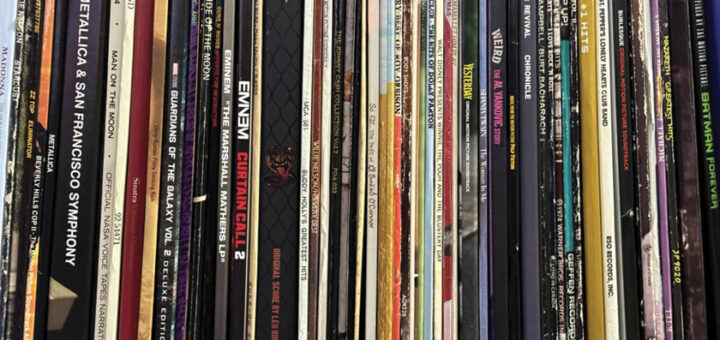
However, the more impactful reason may be the tangible and social aspects of collecting. Physical records—each with unique album art and carefully selected to reflect individual music tastes—offer a more engaging, experiential alternative to streaming. Beyond the records themselves, Facebook groups, record fairs and other community gatherings bring people together to connect over shared passions and interests.
Inside Calgary’s vinyl scene
Blackbyrd Myoozik, the beloved record store on 17th Avenue, offers insight into the city’s vinyl culture and what keeps records—and the shops that sell them—so relevant.
Miles Xavier has been working at Blackbyrd for two years and brings with him a deep passion for music and the community that surrounds it.
When asked why people continue to purchase vinyl in an era dominated by streaming services, Xavier points to the importance of tangibility.
“Being able to hold something in your hand is a big reason,” he says, explaining that records offer a sense of ownership that digital platforms cannot.
He recalls how Neil Young removed all his music from Spotify back in 2022, noting how many collectors felt proud to physically own records that could simply disappear from a streaming library. Much like CDs or cassettes, Xavier says vinyls provide a lasting form of ownership—something tactile that can’t be taken away.
Xavier doesn’t see vinyl as a passing trend. He believes records are a permanent fixture in music culture, saying they “have always been cool.” According to him, record stores—and records in general—have long served as a foundation of the music industry.
For Xavier, Calgary’s record scene also offers a strong sense of community. He explains that Blackbyrd is particularly focused on jazz and hip-hop, noting that “jazz tends to be overlooked in Calgary.” He adds that the store goes the extra mile to represent and support local artists, helping to keep those communities visible and connected.
When asked about the future of vinyl, Xavier says he believes it will always remain relevant. “There’s always this historical thing where vinyl stays permanent—it’ll always be cool in a way,” he explains. He adds that many new artists continue to press records, proving that the demand is still very much there.
Despite its environmental flaws and impracticalities, Xavier believes physical media is worth it in every sense. “There’s such a huge sense of ownership,” he says, noting that collectors take pride in what they own. In an era where everything is at our fingertips, there is something romantic about stepping into a local record store and thoughtfully selecting a vinyl. The nostalgia and sense of community shared among music lovers make record collecting something worth holding onto.
“Vinyls become part of people’s identity,” says Xavier.