
UCP to mandate mandatory citizenship markers on provincial licences

Aima Talat, Contributor
Alberta driver’s licences will soon include a “CAN” citizenship marker and healthcare numbers on them.
Earlier this month, Premier Danielle Smith announced the United Conservative Party’s (UCP) plan to introduce mandatory citizenship markers on Alberta driver’s licenses. The rollout is expected to begin in late 2026.
Minister of service Alberta and red tape reduction officer of Alberta, Dale Nally, states that the change is intended to reduce red tape and promote voter integrity within provincial elections.
The party has stated the updated ID cards will make it easier for Albertans to access provincial services such as student aid or Alberta health benefits by reducing the amount of ID verification needed.
“This change means that when Albertans need to prove both their identity and their citizenship, they’ll be able to do so with a single document,” Smith stated.
Critics argue that the party’s initiative could have unintended consequences and holds possible ulterior motives. With the UCP’s Alberta Next panel bringing proposed changes to how non-citizens access provincial benefits, political observers raise concerns.
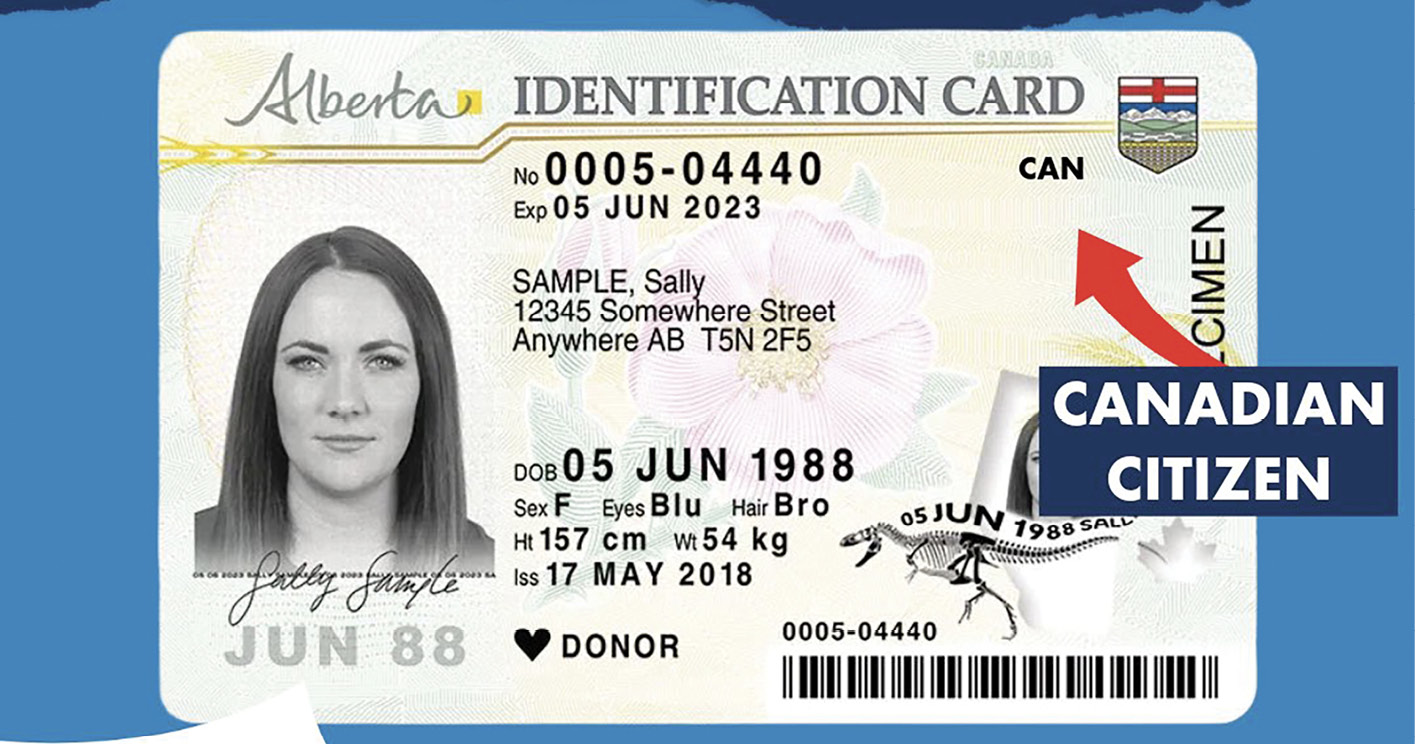
Canadians can expect citizenship ID markers to come into effect by 2026. Photo courtesy of X/@daniellesmith
Jared Wesley, a professor of political science at the University of Alberta, questions the genuineness of Smith’s initiative.
“Given the focus of the Alberta Next panel, we are right to question whether this citizenship marker is a pretext to deny certain non-citizens access to such provincial services,” he says.
Smith’s panel has advocated for provincial sovereignty and provincial control over immigration and social services. Wesley states that the updated ID cards seem to be a pretext move by the government.
Concerns over the privacy of the new ID cards are also apparent.
David Fraser, a privacy and civil liberties lawyer, raises concerns over the right to privacy Albertans have when at traffic stops or when required to display ID for age verification. He is also concerned about who has the right to have access to citizenship information.
“The concern is that [citizenship information is] all of a sudden accessible to anybody who has a reason to ask you for ID, and that in and of itself is problematic,” Fraser states.
As the 2026 rollout approaches, criticism and concern grow about the UCP’s intention and focus when implementing the new ID.