
Sharing is caring: Becoming an Inclusion Week speaker
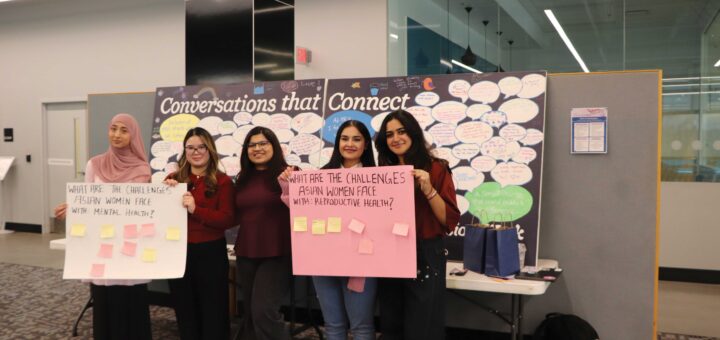
Sofia Ibrahimi, Contributor
Having something worth sharing does not always mean being an expert–sometimes, it starts with an experience, an interest or something you simply care about.
Mount Royal University’s Inclusion Week is returning Jan. 25 to 29, 2027, which gives students another opportunity to turn their ideas into real-time discussions across campus. Presenter applications are open to all students, faculty and staff until Oct. 30.
Organised by MRU’s Office of Community and Belonging, Inclusion Week features talks and activities focused on fostering a sense of kinship. Eleven students participated as speakers or co-presenters during the week’s 29 sessions in 2026.
Inclusion Week is overseen by Narissa Jessa, an education and development professional in the Office of Community and Belonging.
For Jessa, getting students involved is especially important as they don’t always have a platform to be heard.
Giving a typical lecture in front of an audience is not the only way to become a presenter. According to Jessa, exhibitions can take many forms, such as panel discussions, fireside chats, and artistic approaches, as long as they connect back to inclusion and community.
Bringing stories to the stage
For sociology students Sam Boutin and Bunny MacLean, that contribution came through preserving the stories of older members of the 2SLGBTQIA+ community.
Alongside their fellow presenter Gabi DiGioacchino and David Aveline, the group collected oral histories to preserve them in the university’s archives. Boutin conducted interviews for the project, while MacLean assisted with transcribing the stories.
For Boutin, preserving those experiences gives often-overlooked perspectives a chance to be heard and remembered.
Inclusion Week gave the group an opportunity to take those stories beyond the archive.
They presented through a panel discussing both their work and what drew them to it. MacLean says that sharing something personally meaningful can help others connect with an experience beyond their own.
“Anyone could read them and gain a little something. Gain a little perspective– feel connected to humanity,” MacLean says.
But deciding something is worth sharing does not necessarily make getting in front of an audience easy. For Boutin, MacLean and DiGioacchino, what came from pushing past that fear made it worth facing.
Boutin says that, initially, public speaking made her nervous, but presenting at Inclusion Week helped ease some of that fear. Instead of facing an uninterested room, she found an audience that had intentionally shown up to listen.
Around 30 people attended their panel, but their connections grew beyond the audience.
Boutin says the experience helped her build skills and introduced her to people who shared similar interests, turning the presentation into an opportunity for community beyond being a panel presenter.
The connection and belonging created during this event extends across Inclusion Week. The 2026 event drew 1,260 attendees across virtual and in-person sessions, with students making up 35.4 per cent of registrations.
For Maclean, those connections can begin with students recognising that the subjects important to them may matter to somebody else too.
“If you have something that’s really important to you, it’s going to be important to other people,” Bunny says.
Students also do not have to figure everything out on their own. Jessa notes that the Inclusion Week committee is full of support for interested potential presenters who have an idea but are unsure where to take it.
For students questioning whether they have anything meaningful to contribute, Jessa encourages them to recognise the value of their ideas and what they already bring.
Presenter applications for Inclusion Week 2027 remain open until Oct. 9.