
OPINION: Why revisiting a competitive sport can be sink or swim
Bella Coco, News Editor
January still feels like a starting block.
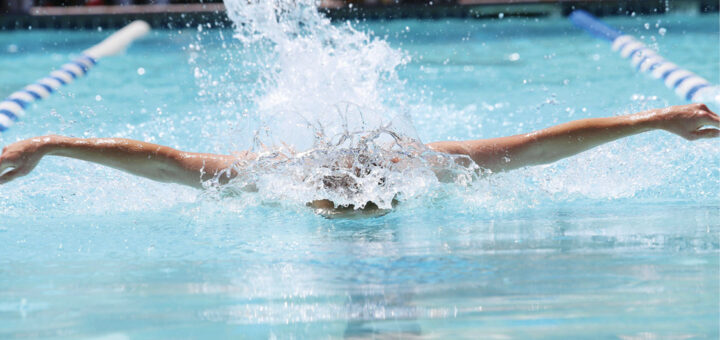
I was 14 when I slammed my hand into the wall and saw my 50-meter butterfly time—32.9 seconds, which meant I had qualified for the Alberta Winter Provincials. This was suddenly the most beautiful time in the world, and having it listed next to my name in bright red lettering on the time-tracking sign sent an electric jolt through my spine.
I had travelled this road for far too long, and compared to my teammates, I was extremely late to the provincial party. Most of them had started swimming at age five, trying out for the team as soon as humanly possible, and setting their sights on earning a collegiate team spot before hitting their teenage years.
Beginning the journey at 10-years-old was considered blasphemous and, frankly, idiotic. I would never catch up in time, and their years of experience would shape how they treated me on and off the pool deck.
To them, provincials were nothing but routine. You’d show up, do your damn best, and be sure to score that year’s $100 hoodie, which you would flaunt to every practice going forward. To me, it was the vindication I had so desperately yearned for after years of locker room whispers and ice outs.
Even though January was mid-season, chlorine-heavy, and all short breath and sore muscles, March suddenly felt close enough to reach.
Provincials were circled on the calendar in pen. My parents would count down the days and be far too chipper to drive me to those 5 a.m. practices.
Then the world shut down. Pools closed. Meets vanished. By the time March arrived, so did COVID-19, and the meet that I had spent five years chasing dissolved into a press conference and a public health order. I didn’t know it then, but that was also the quiet, hushed end of my competitive swimming career.
Before the beginning of the end, swimming had already been slipping away from me. A shoulder injury, one that never felt dramatic enough to deserve grief, had been growing louder with every practice. It wasn’t a single breaking moment, just a long negotiation with pain: ice packs, modified sets and the constant question of whether pushing through was worth it.
Being a minor meant the golden ticket opportunity of seeing an orthopedic surgeon was slim, so I was reduced to physiotherapy sessions once a week under harsh fluorescent lighting.
When the pools eventually closed, the decision was made for me. There was no farewell race, no last ribbon or medal, no chance to prove anything. I was done.
At 14, quitting felt like the ultimate failure, and six years later, it’s more complicated.
What it takes to return as an adult
Now 21, I quietly returned to swimming this year and somewhat anonymously. The apprehension and excitement were conveyed in big bold letters in a group text to my parents, who seemed to let out a sigh of relief that I was no longer avoiding the lanes.
There was no bold team logo on my cap. No coach yelling splits. Just me, a public lane, and the routine hum of the filtration system. The first thing I noticed wasn’t the burn; it was how surprisingly familiar the water felt after seven years. My form wasn’t half bad, and my strength hadn’t completely disappeared.
While my body remembered the movements before my mind did, my shoulders were quick to remind me that this was no longer the same relationship. Breathless, I had to stop mid-lap and switch to a measly back kick. I had to rest. I had to listen.
I’ve discovered that what I’m relearning now isn’t how to be fast or be the best. It’s how to be patient.
Competitive swimming trained me to measure my worth in seconds and placements. I learned early that improvement is visible and merciless. Coming back without that structure has been disorienting and humbling, leaving me to feel exhausted after 45 minutes.
Now, I’m learning to see swimming as a privilege rather than a performance. I don’t have to go to the pool; now I get to go. How enlightening is that?
It feels incredible to know my body can still swim, even if I’m imperfect. There is safety in swimming without an audience, in choosing distance over speed and in getting out of the pool before the pain escalates, not after.
Sometimes I think about that 14-year-old, standing on the slippery pool deck in January, dreaming of March. I wish I could tell her that the ending she never got wasn’t the end at all, it was just a pause. The water is still here. So am I.


