OPINION: Why AI music isn’t real art

Zafir Nagji, Sports Editor
For the first time since 1990, no rap songs ranked in the top 40 of Billboard’s industry-standard-setting Hot 100 list. Despite the genre experiencing its golden era, with a market share peak just five years ago, rap music was absent from the top two-fifths of the list, breaking a 35-year streak as Kendrick Lamar and SZA’s Luther fell from the top 40 on Oct. 25.
A week later, Xania Monet became the first AI-generated artist to debut on Billboard’s Adult R&B Airplay chart with her song, How Was I Supposed to Know?, which ranked in the top 10 of Billboard’s R&B Digital Song Sales chart, the top 22 of their overall Digital Song Sales Chart, and appeared on the Hot R&B Songs chart in September.
With one long-standing precedent reaching its end and a concerning new one beginning, listeners, critics, and other artists are growing concerned as the AI revolution looks to claim music as its next casualty.
The blueprint
Inherently, art is meant to be a form of human expression, and music is no different. Hip-hop and rap originated from the struggles that people of colour endured in America. The term R&B, which stands for rhythm and blues, was coined by Billboard in 1948 to replace the offensive term “race music,” which included all music by black artists.
Hip-hop, rap and R&B have stood the test of time and were a huge part of the Civil Rights movement, proudly unswayed by its lack of mainstream popularity. The Notorious B.I.G. and 2Pac revolutionised the industry in the 1990s, remaining authentically hip-hop while achieving legitimate sales for their records.
White rappers like Eminem diversified the game and added new dimensions, and artists like Ye (formerly known as Kanye West) and Drake incorporated elements from other genres, redefining expectations for a rapper’s personality and the subject matter of their music. This helped the genre break into popular culture, with some tracks even starting to receive radio play, until hip-hop, rap, and R&B officially became mainstream. Today, the genre’s influence on pop culture is undeniable.
Nothing was the same
On the one hand, this was a positive shift in the music industry. More people were made aware of Black culture than ever before, and the genre reached its peak in accessibility duringthe technological revolution.
On the other hand, rap became pop culture, industrialising a genre built on the struggle and the battles for equality that generations of Black people endured. Many artists have spoken on the commodification of Black struggle and culture, with more rappers growing in popularity by making music that affirms stereotypes and continues to oppress people of colour as a whole, betraying the same principles that hip-hop, rap and R&B flourished from.
So, when an AI-generated artist racks up 17 million streams in two months on her way to multiple Billboard charts and a multimillion-dollar record deal, the status of culture in music starts to look definitively worse.
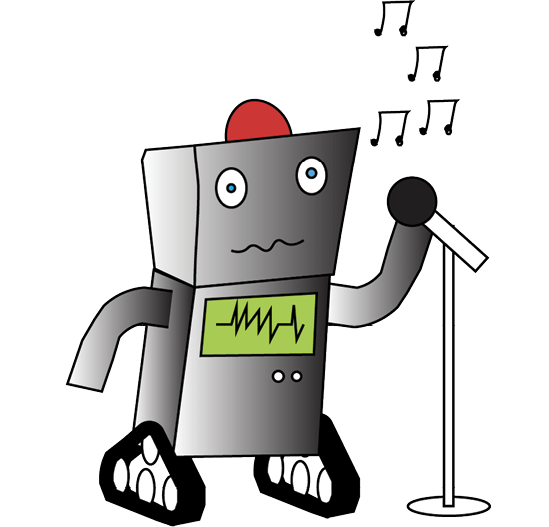
AI music production is involving less and less humans
with each adaptation. Illustration courtesy of Aiden
Johner
Ctrl (alt, delete)
Let’s make one thing clear—Xania Monet is not a sentient, self-producing artist. Telisha Jones, a 31-year-old Mississippi-based poet, is responsible for Monet’s “birth,” using her own poetry to write lyrics that she can prompt Suno, a musical ChatGPT of sorts, to synthesise into a song.
Despite the human songwriting, award-winning R&B artist Kehlani still doesn’t see any validity in AI-generated music of any kind and spoke out against it on a now-deleted TikTok video:
“This is so beyond out of our control…nothing and no one on Earth will ever be able to justify AI to me.”
Kehlani also took issue with the lack of attribution in AI art, as generative systems like Suno are trained on countless copyrighted creations. The Recording Industry Association of America spearheaded a massive copyright lawsuit in 2024 against the platform, bringing along Warner Music Group (WMG), Universal Music Group (UMG) and Sony Music as they sued Suno and a similar platform, Udio, for mass copyright infringement.
UMG and WMG settled their cases this year, and both launched joint ventures using the same AI programs they had sued just a year earlier. Both labels are now partnered with Udio, and Suno agreed to a settlement/joint agreement with WMG, which will let users create AI-generated music based on the names, images and likenesses of artists who opt in to the new programme.
Collision course
To make a living from their music, most artists have to sign record deals with massive labels like UMG and WMG, which effectively transfer ownership of their music to those companies. Now, as those conglomerates partner with AI platforms, they could financially pressure artists to agree to give up their names, images, and likenesses to train those programs.
With Monet, the only saving grace is that a true human artist is writing the lyrics and ideating through Suno, which some have argued is functionally identical to a singer employing a writer.
However, just listening to Monet “sing,” an untrained ear can feel that something is missing. Yes, the vocals sound awful, and the mixing is less than ideal, but moreover, the very emotional subject matter of the music feels hollow and soulless in its delivery.
Additionally, while a singer may not always write their own lyrics, and a lyricist may not always sing their own songs, both impart their personal human touch to their art and use talents they’ve cultivated over time. No matter how sonically perfect an AI-generated song is, it will never feel as real as a sonically imperfect human-generated song.
Record labels and conglomerates will always chase the maximisation of their bottom line, and have historically not hesitated to do so against artists’ wishes. This trend is no different, but as Grand View Research reports that AI now occupies almost 40 per cent of the North American music market share and continues to grow, artists will have an even harder time breaking into the industry to make a living from their art.
And if there are no humans in art, is there any art left?