How Ottawa plans to spend $78B more than it earns
Emma Marshall, Publishing Editor
Every budget has its own footprint, and this one started with a shiny new pair. Finance Minister Francois-Philippe Champagne laced up a fresh pair of black Oxford-style shoes before stepping into the House of Commons—a nod to the long-standing Canadian budget-day tradition.
But this year, the ritual came with a made-in-Canada twist. On Nov. 3, ahead of the 2025 federal budget, Champagne visited Boulet Boots in Saint-Tite, Que. where he joined local workers on the factory floor to make his shoes.
Rolling up his sleeves was a symbolic gesture to underscore his promise that this would be “an investment budget” built on Canadian resilience.
A new era of budgeting
The 2025 federal budget, released on Nov. 4 and titled Canada Strong, marks the first fiscal plan under Prime Minister Mark Carney’s leadership.
Branded as a blueprint to “build, empower, and protect,” the document promises record investments while forecasting a $78-billion deficit, the largest outside of a pandemic year. This is expected to gradually shrink to an operational budget by 2028-29.
For Carney’s government, the message is clear: long-term resilience outweighs short-term restraint.
“It’s our country. It’s your future. We are going to give it back to you,” said Carney in his pre-budget speech on Oct. 22.
The budget also ushers in a procedural shift. Traditionally released each spring, federal budgets will now be tabled in the fall, with the fiscal update moving to spring.
This change, part of the government’s new Capital Budgeting Framework, is designed to make spending decisions more transparent and better aligned with the fiscal year that begins April 1.
“Today, we’re laying a stronger financial foundation for Canada,” said Champagne in a news release. “This is how we’ll deliver generational investments that build Canada Strong.”
For the first time, the federal government has divided its spending into two categories: “operational spending” for regular programs and services, and “capital investments” for long-term priorities like housing, defence and infrastructure.
Unlike previous years, the budget does not include an Indigenous-specific chapter.
“The government remains committed to reconciliation. Crown-Indigenous Relations and Northern Affairs Canada and Indigenous Services Canada deliver important programs that are legally or constitutionally required,” the document reads.
“Budget 2025 falls short in meeting the urgent and long-term needs identified by First Nations,” writes the Assembly of First Nations in response to the budget release.
While some commitments were made to First Nations regarding infrastructure and major project consultation, there is “no specific First Nations investment in health, training, language, or Truth and Reconciliation.”

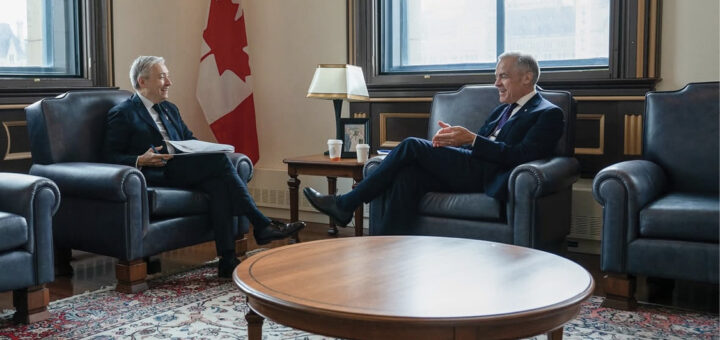
With the last vote to pass the budget set for Nov. 17,
a failure to pass with opposition support could head
Canadians into another election. Photo courtesy of
Instagram/@fp_champagne & @markjcarney
What’s in it, and why it matters
The budget pledges $141.1 billion in new spending over the next five years. The document outlines $25 billion for housing, $30 billion for defence, $115 billion for infrastructure and $110 billion for productivity and competitiveness over the next five years. This is alongside about $60 billion in savings through staffing reductions and efficiency measures.
About 42 per cent of the plan focuses on strengthening Canada’s sovereignty, while 36 per cent targets cost-of-living relief for Canadians.
For average Canadians, tax rates remain stable in many areas, but incentives and regulatory changes target sectors like clean energy, manufacturing, tech and housing.
Champagne and Carney have both framed the plan as a pivot toward resilience, arguing that strategic spending now will make Canada less vulnerable to future shocks.
However, not everyone is convinced. The Fraser Institute warned that the plan could increase policy uncertainty, with some fiscal conservatives arguing Ottawa is prioritising political optics over fiscal prudence.
Still, supporting business groups and economists have cautiously welcomed its emphasis on productivity and innovation, arguing that Canada must invest now to address low growth and global instability.
The politics of passage
As of Nov. 7, the Carney government has secured two of the three required votes in the House of Commons to pass the budget, a critical step for a minority government facing mounting pressure. With one final confidence vote expected next week, a defeat could trigger a winter election, the first in less than a year.
For now, Champagne appears confident his Canada-made shoes will carry him—and the government—across the finish line.
“These are bold, pro-consumer actions we need to build a stronger economy and bring down costs for Canadians,” said Champagne in a news release on Nov. 6.