
The rising global tide of right-wing extremism
Khaoula Choual, Staff Writer
Political violence has risen in the last couple of years, and Canadian researchers and politicians have voiced concerns about the rise of the “far right movement.” However, this isn’t a trend specifically in Canada, but rather a growing concern worldwide. Alt-right demonstrations like rallies and protests have been shown in Canada, the United States, the United Kingdom and Europe.
During the early 2000s, the 2008 financial crisis and the 2015 refugee crisis, right-wing movements provoked issues around government involvement, economic hardship, integration, immigration, security and individual freedom. Many world leaders and groups capitalised on this fear, dividing people into an ‘us’ versus ‘them.’
Rising political violence
After the assassination of conservative political activist Charlie Kirk on Sept. 10, 2025, U.S. President Donald Trump claimed the left-wing radical groups instigate political violence in the U.S. and “they should be put in jail.”
In response to Kirk’s death, the top presidential advisor Stephen Miller said, “We are going to use every resource we have … throughout this government to identify, disrupt, dismantle and destroy these networks and make America safe again.”
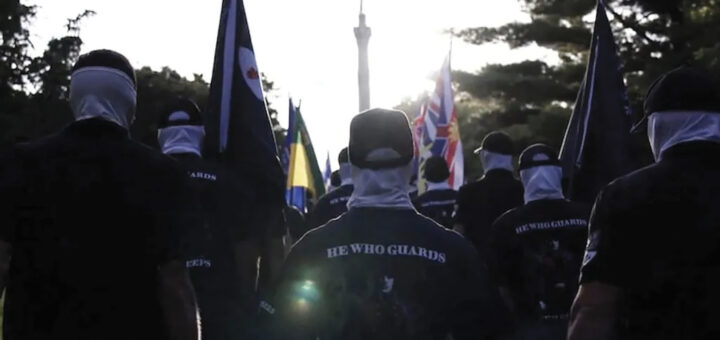
In Canada, the right-wing viewpoint has significantly grown. The CBC reported on Fascist Fight clubs that were recruiting members who were interested in martial arts and getting into proper shape. These fight clubs are initially planning a ‘race war.’
The global project against hate and extremism (GRAHE) reported that neo-Nazi clubs have increased by 25 per cent since 2023. In 27 countries, there are 187 active fight club chapters.
New groups are also actively recruiting teenagers ages 15-18 into ‘youth clubs.’ The clubs are connected to white nationalist supremacy groups like the Proud Boys and Hammerskins. Active groups like the Second Sons have chapters in Ontario, New Brunswick, Saskatchewan, Alberta and British Columbia.
These groups believe in a conspiracy of the Grand Replacement, believing that the elites are conspiring to replace the native population with immigrants.
The CBC reported that in July, the RCMP arrested four Quebec men for allegedly planning a militia where they allegedly were plotting to take land in the Quebec City area. All the men had a connection to the military.
The RCMP investigation of the accused men suggests they spent $500,000 on weaponry in a period of two years. It is also believed that third-party involvement for the funds was a possibility.
The connection between rhetoric and political violence
Politicians and political influencers have been reliant on pushing rhetoric. Rhetoric vilifies political opponents, marginalised groups, immigrants or institutions, leading voters to a proclaimed enemy, which has its consequences. Politicians have been known to use it, no matter if there is truth to the claim.
Some politicians, such as Trump, rely on influencers and political movements to mobilise voters. During the 2024 presidential election, Charlie Kirk, who founded Turning Point USA, helped rally young voters to support Trump. Kirk was known for inflammatory comments towards minorities, abortion, Muslims, and for condemning the civil rights movement, citing his Christian faith.
The motivation for his killing, according to the BBC, was that his killer said, “I had enough of his hatred.”
Social media and political rhetoric
In the past years, communication through social media has transcended borders, often pushing right-wing rhetoric and white nationalism beyond dog whistles. Extremists have been weaponizing ‘harmless’ phrases and symbols to promote hate.
Global connections through social media have made it easier to communicate. With platforms holding zero to little moderation, it allows people to push harmful rhetoric meant to appeal to like-minded users to understand the reference they are trying to convey.
The rise of right-wing extremism poses a great threat to undermine democracy, such as the lack of trust in institutions and normalizing exclusion politics, intimidation of an alleged enemy, pointing the finger at the ‘other,’ and legitimising violence.