Turning the tide, one thread at a time

Bella Coco, News Editor
To the casual passerby, a table scattered with scraps of fabric and donated garment pieces looks unremarkable at first glance. But in the hands of The Aquativity Project (TAP), these once discarded pieces become the starting point for something extraordinary.
TAP is a non-profit, Calgary-based collective that transforms recycled and donated materials into upcycled fashion pieces while creating space for education, mentorship, and community engagement.
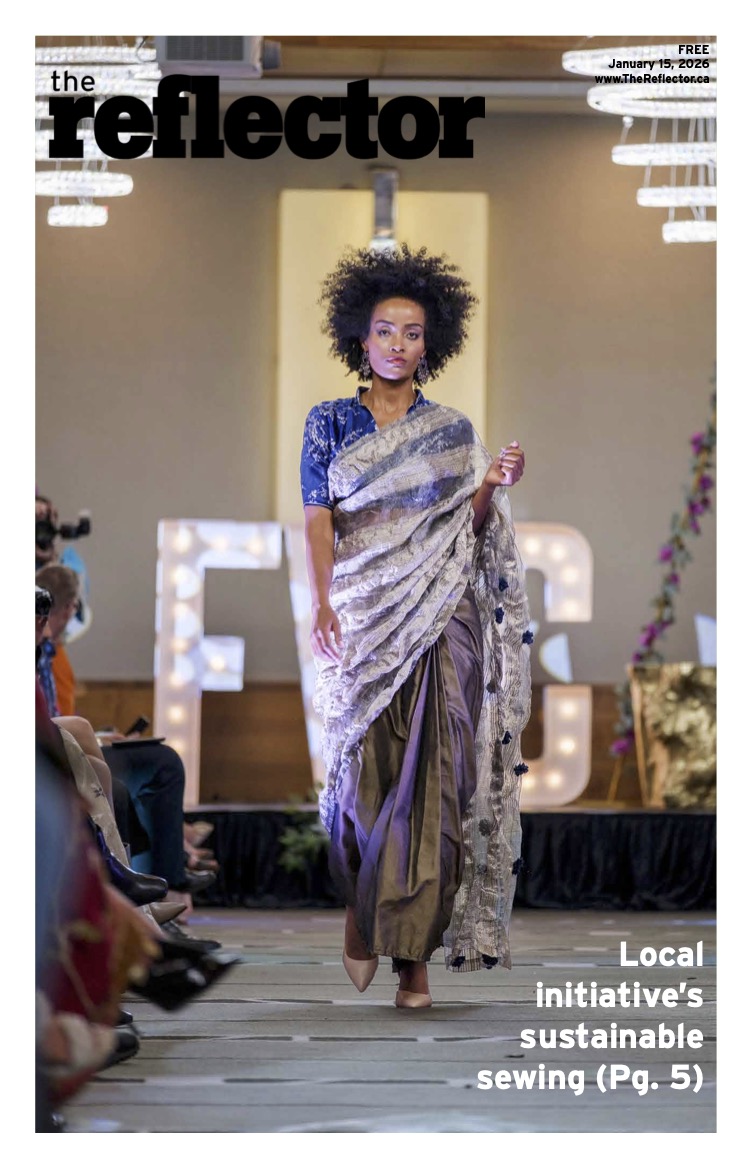
TAP’s work sits at the intersection of slow fashion, environmental advocacy, and cultural storytelling, with a particular emphasis on South Asian-inspired design. Through runway shows and community events, the organisation encourages audiences to rethink consumption and consider the environmental impact of their closets.
Supported early on by Ocean Wise and shaped by partnerships with local artists and sustainability-focused groups, TAP has grown from a single idea into a platform for creative climate dialogue.
For Nidhi Kotikalapudi, TAP’s founder and artistic director, turning waste into a catalyst for conversation is the core of the organisation’s work.
Putting down roots
However, before TAP was an organisation, it was merely an idea that began not in a design studio, but with environmental concern. Kotikalapudi describes herself first and foremost as an environmentalist—not a fashion designer.
With an education background in biomedical sciences and neuroscience, Kotikalapudi says it was easy for her to see the important connection between human well-being and environmental health. By combining her learning with a passion for fashion, everything started to fall into place.
“I think what inspired me personally is that I really love clothes. I like fashion. I don’t think I was ever considered to be someone who was a designer, but I liked fashion. Coming from a South Asian background, I’ve seen a lot of community interest, which is part of my upbringing. And then, mixing that with being an environmentalist, I think it was really cool to be able to merge those two ideas,” she says.
Building TAP was never a solo effort. In its earliest stages, Kotikalapudi relied on extensive outreach, including numerous emails and phone calls, to recruit collaborators with skills in fashion, sewing, photography, and production.
“I think the first month was really trying to find the right people with the right knowledge, because I had no design experience. I didn’t know how clothes were made, and I needed some expertise from people in the fashion industry.”
Through her connections at the University of Calgary Sustainability Office and her personal network, Kotikalapudi would seek advice on the project or reach out about modelling jobs.
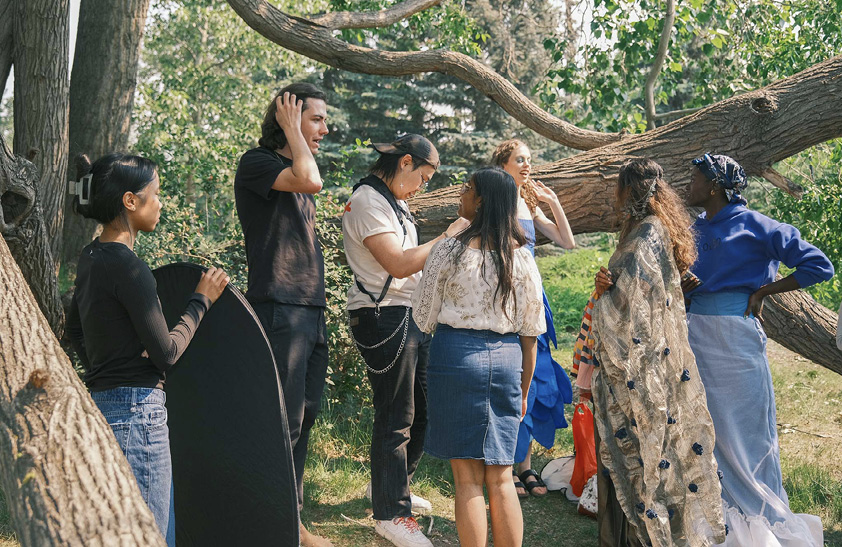
Behind the scenes at a TAP photoshoot. Photo courtesy of The Aquativity Project
Past the soil
As its community grew, TAP formed its first partnerships with groups such as the UCalgary Fashion Network. Since then, TAP has expanded beyond university affiliations, growing into a broader collective of designers, volunteers, interns and artists.
As TAP grew into a broader collective of designers, volunteers, interns, and artists, Kotikalapudi also made sure to support the people involved.
“Another really important thing for me was that we were supporting people who were aspiring professionals and not just jumping to who’s the best photographer in town, or who’s the best videographer, but really finding people who were also trying to build their portfolios,” she says. “So it was a win-win situation for everyone.”
When it comes to fashion, Kotikalapudi argues it is uniquely suited to environmental storytelling.
“I think art is a really good storyteller. It can help bring the past, present, and future together and combine them. It’s a great way to capture people’s attention. When someone sees something, and they’re like, ‘Wow, that’s really pretty.’ But then, when they realise it’s made entirely from thrifted, recycled, unwanted materials, that is when the conversation really starts,” Kotikalapudi says. “And that’s the factor we want people to take away from this, rather than just having a trifold or an essay. That’s a lot of words, but I think art can say a lot more than what we can do just with words.”
However, beneath the shimmering fabric and glittering eyeshadow, running TAP has not been without challenges. Limited funding, last-minute logistical changes, and the constant balance between activism and artistry are ongoing realities for the non-profit. Staying calm under pressure, Kotikalapudi notes, is an area where she’s seen personal growth.
“Our last photo shoot was a challenge. We were trying to find a videographer two days earlier because our videographer had quit. Our lead makeup artist quit a few days ago, and half of our makeup team literally fell apart two days before the shoot, so we had three makeup artists instead of 12. It was definitely chaos. In the past, I would’ve freaked out. I would’ve really panicked, and that energy would have reflected onto all the project leads,” she says. “Instead, I decided that no matter what, this photo shoot is gonna happen, whether the model has makeup on or not. We just have to keep pushing through, and things will fall into place.”
In bloom
Regarding future work, TAP is ready to gear up and achieve additional goals. By starting the year with their biggest fashion show to date on Jan. 10, TAP is ready to “refine their process” and continue working toward becoming zero-waste in their work and pieces.
With more local events, such as Bow River shoreline cleanups, on the horizon, Kotikalapudi says all the credit for TAP’s growth goes to the community’s support.
“Because of their support, that’s why we’re able to continue, expand our projects, do more collaborations, because people are really interested in the work that we do. We do something very unique. It’s very difficult, but unique.”