
Amidst firings at Rockstar, ethics come into question
Sophie Botheras, Contributor
For many, games serve as an escape from the reality that surrounds them. For the people making them, though, games often are that reality, and it is a reality more turbulent than one may expect.
Employees under fire
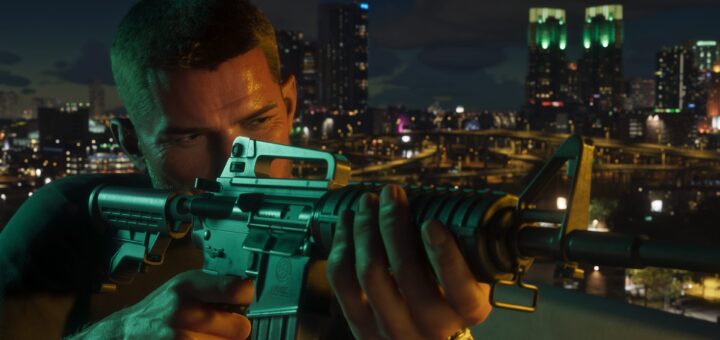
On Oct. 30, Rockstar Games, the studio behind the upcoming, highly anticipated Grand Theft Auto VI (GTAVI), fired over 30 employees, according to BBC. The firings came about after Rockstar higher-ups discovered a shared group chat between the employees, and subsequently claimed they were publicly leaking company information in a statement to Bloomberg.
The former Rockstar employees were all members of a group chat who were attempting to unionise within the company. According to Alex Marshall, president of the Independent Workers’ Union of Great Britain (IWGB), the only non-employee members of the chat were union organisers.
“[Rockstar is] prioritising union busting by targeting the very people who make the game,” says Marshall in a statement to IGN. “We refute that confidential information was shared publicly.
An anonymous Rockstar employee took to a forum to discuss the firings, claiming that “those of us who are lucky and remain for now work in fear.” Later in their post, they report that “morale in the studio is at rock bottom.”
Following the firings, IWGB members and fired Rockstar staff began protesting outside of the company’s office in Edinburgh, Scotland.
A rock(star)y history
The recent firings are only the latest event in a long and turbulent history that Rockstar has with employee welfare and questionable labour conditions.
In 2018, Jason Schreier reported via Kotaku the extreme crunch culture that plagued the studio, with several employees claiming to average 55 to 60 hours of work a week. Crunch is certainly not uncommon within the gaming industry, but typically exists within small windows of time shortly before a game’s release. However, in the case of Rockstar, it was said that this crunch lasted months, or even years.
And while Schreier claims in a Bluesky post that crunch culture has massively diminished throughout the development of GTAVI, Rockstar has still been making controversial choices in regards to employee welfare. In 2024, the company mandated its employees to return to in-office work for the full work week, citing productivity and security concerns.
In response to this mandate, an anonymous employee said that Rockstar leadership “need to rethink their reckless decision making and engage with their staff to find an arrangement that works for everyone.”
The mandate was additionally heavily criticised by the IWGB.
Inevitable success, but questionable ethics
On Nov. 6, the same day the protests in Edinburgh began, Rockstar announced that they would be pushing the release of GTAVI back from its formerly planned date of May 26, 2026 to Nov. 19 of the same year. This comes after the game’s first trailer initially promised a 2025 release date.
While GTAVI is projected to be one of the industry’s most successful titles in history, this delay has sparked outrage amongst the game’s fanbase. In the replies to the company’s announcement of the delay on Twitter, a mixture of anger and speculation drive the discourse. While many fans are upset at the prospect of waiting even longer for such an anticipated release, others are more skeptical, and believe that the decision can be traced back to the firings executed only a week before the announcement.
Nonetheless, it remains to be seen how cultural dialogue will shift in the wake of the news of Rockstar’s firings. While many fans have been put off by the company’s alleged union busting, others continue to eagerly anticipate GTAVI’s release nonetheless. Given the game’s massive influence in the space, there is little doubt that games media will continue to cover it, but the question of the ethics of GTAVI’s production looms larger over its release each day.