Pressing play

Joy Dutta, Contributor
Tucked between the hoodoos of Alberta’s Badlands, the Royal Tyrrell Museum shrank in my rearview as the Gorillaz hummed through my headphones, and I realised something startling: not once, in the past three hours, had I checked my phone.
According to Statistics Canada, that’s rare these days. Of the 84 per cent of Canadians who reported owning a smartphone in 2020, 53 per cent said they started their day by switching on their devices.
Between emails, social media, and endless playlists, most of us carry our entire lives in our pockets, but I’d left all that behind. In my hand was a modified iPod Classic: sleek, silver, and loaded with 1,000 hours of audiobooks, Daft Punk deep cuts, and enough Gorillaz to last a lifetime.
It began as a cost-cutting experiment. Audible kept glitching on my aging phone and library tablet, and, as a university student with not a lot of money, I couldn’t justify getting a new device or another subscription.
I craved something simple, something that worked. So, I turned to an old iPod Classic and upgraded it to be a device dedicated to one thing only: listening.
No texting or ‘are you still watching?’Just sound.
Making your own escape
Modding the iPod wasn’t easy. Prying open the case demanded patience, the right tools, and a few deep breaths. But after some elbow grease, I had a portable library that didn’t drain my phone battery, data plan, or bank account.
A new high-end phone? Unnecessary. Premium streaming addons or cloud storage fees? Skipped. This little machine costs less than $100 total and runs for days on a single charge. If you’re willing to put in the time, you too can have your own in five steps.
1.Carefully open the case
Using a thin plastic pry tool, like a guitar pick or spudger, into the seam between the front panel and the metal back. Gently apply pressure around the edge to release the clips. Never use knives or screwdrivers, as this could scratch the case or cause short-circuit damage.
2. Disconnect the battery
With the back now lifted just enough to see inside, I unplugged the battery’s ribbon cable from the logic board. Ribbon cables are fragile and only fit in one place, so make sure to handle them carefully. Always work with the power disconnected, as this prevents shorts and protects the machine’s delicate insides.
3. Replace the battery
Like mine, most old iPod batteries are worn out, so I replaced this with a new lithium-polymer (Li-Po) 3.7 V battery sized specifically for the Classic. The original battery was held by a light adhesive, so I slowly lifted it and placed the new one in the same spot to reconnect the ribbon.
According to the University of Vermont, mishandling LiPo batteries can lead to “fire, explosions, and toxic smoke inhalation.” It’s important not to puncture the battery, and if it shows signs of swelling, leaking, or other damage, be sure to dispose of it properly at a marked drop-off location. Visit recycleyourbatteries.ca to find ones near you.
4. Upgrade the storage
I removed the aging hard drive and installed an iPod-compatible adapter—often called an iFlash board—that accepts an SD or microSD card. This fits neatly into the same ribbon that was attached to the original hard drive.
5. Reassemble
Before snapping the case shut, I double-checked that every ribbon cable was properly seated. Then, using Apple’s iTunes, I restored the iPod to format the new storage, and synced my pre-purchased music as usual.
With headphones in and the volume low, your handy work is ready for testing. If it plays clean—no skips, static, or surprises—you’re good to go.
Experiences over specs
On my trip to Drumheller, Alta., I wandered Horseshoe Canyon with Fyodor Dostoevsky’s Crime and Punishment playing softly, the wind threading silence between Raskolnikov’s tormented thoughts.
Later, perched beneath the shadow of the world’s largest dinosaur, I queued up the Gorillaz “Feel Good Inc.” and watched the sunset drench the Badlands in gold.
That’s what a lot of us are chasing now: presence. We’re tired of hyper-curated feeds and battery anxiety. We want to feel music, not skim it. We want stories that unfold slowly like film in a darkroom or pages easing to yellow.
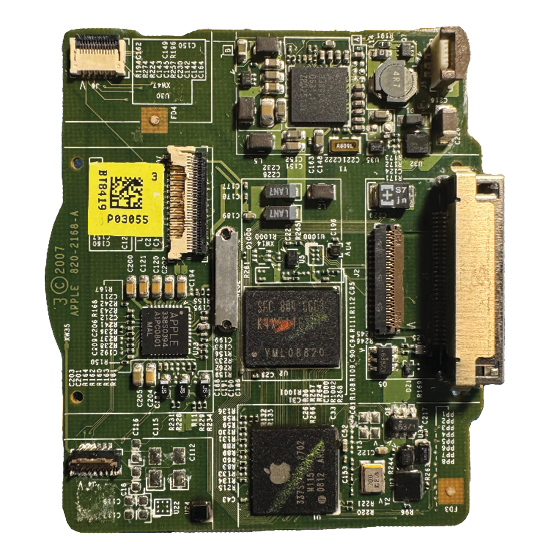
Inside of an iPod Classic switch board. Photo courtesy of Joy Dutta
My iPod gives me that. It demands intention. Every album, every chapter is chosen—not served. When I’m sunk into a Gorillaz groove or drifting through a Daft Punk synthscape, there’s no calendar ping, no meme, no nudge toward the next thing. I’m simply there.
So if you’ve got a dusty iPod Classic in a drawer or can snag one for cheap on Kijiji or Facebook Marketplace, do yourself a favour: crack it open, mod it up, and fill it with the stuff that matters to you.
Because sometimes, the best way forward is pressing play on the past.