
New iPhone 17 trades comfort for curiosity
Zafir Nagji, Sports Editor
When Apple burst onto the scene with the Macintosh 128K in 1984, they established a reputation that stuck with them for decades to follow. Computers already existed at the time, but Apple’s design and technological maximisation made it feel groundbreaking.
Nothing captured attention like the iPhone, though, which Steve Jobs famously revealed in 2007 as the first phone with a multi-touch interface—a touch screen that can tap, scroll, zoom, et cetera.
The iPhone positioned Apple as technology royalty, making the company the largest vendor of mobile phones and grossing over three billion units sold. From the first iPhone to the iPhone X, Apple brought incredible new features to every model, including breakthroughs like FaceTime, iMessage and the introduction of their streaming service, Apple Music.
However, as Apple continued to expand, innovation took a backseat to growth. Everyone wanted the new iPhone regardless of what improvements were made to the previous year, as the once-groundbreaking piece of technology became a status symbol. From the iPhone 11 to the iPhone 16, Apple introduced slightly improved versions of what felt like the same phone, slowly losing market share as Google’s Pixel, Samsung’s Galaxy and the litany of other Android phones became the innovative choice.
With the iPhone 17 release, though, something feels different. Sure, the base model doesn’t look all that different from the 16, which didn’t look all that different from the 15, which didn’t look all that different from—you get the point.
Something’s in the (iPhone) Air
Apple has returned to innovating with experimental ideas with the all-new iPhone Air, “the thinnest iPhone ever made.” Weighing in at just 156 grams and measuring just 5.6 millimetres thick, the iPhone Air is far from a perfect product. But as an idea that chases innovation for the sake of pushing boundaries, it is a long-overdue return to form for Apple.
The Air has a slightly smaller battery than the one in the iPhone 16, for example, and to fit all the hardware required for a modern smartphone, Apple has ditched the rear multi-camera setup in favour of a singular camera, the bottom speaker, and even the SIM tray—making the Air an eSIM-only phone.
Focusing on only what Apple did not put into the phone would hide the innovations they made, however. As they chased their objective of engineering the thinnest iPhone ever, the battery has a lower capacity than that of the iPhone 16—3561 mAh in the 16 compared to 3149 mAh in the Air—but its new processor and neural accelerators mean that its video playback time is five hours longer.
That’s handy, considering the Air’s screen includes all of the features of the 17 Pro Max screen, like ProMotion and an always-on feature, and is 0.4 inches larger than the 16’s.
Speaking of the Pro, Apple crammed their A19 Pro chip—albeit with one less GPU core than on the flagship models—into the thin design of the Air, and while cooling may not be as efficient as the much thicker Pro and Pro Max models, it gives the phone incredible capability without being overwhelmingly difficult to cool.
For the majority of users, the biggest sacrifice is the single-unit rear camera. Most iPhone users have become accustomed to an ultra-wide camera, which is something that the Air ditched.
But, with better post-picture processing and the same telephoto camera as the 17 and 17 Pro models, the Air remains a proficient lens for the everyday person.
Instead of a worse rear camera, Apple fitted its flagship Center Stage front camera with an all-new 24 megapixel square sensor and artificial intelligence features, which make taking selfies and front-facing videos smoother than ever, and those features carry over to FaceTime calls, too.
Other phones in the thousand-dollar-plus price bracket will have better batteries, cameras, and standard features than the Air, but the Air isn’t about perfection. It’s about innovating and chasing a concept, pushing the limits of technology and making advancements that will trickle down into future products.
Pros with very few cons
The Pro and Pro Max models tend to lead the way in sales as Apple continues to grow as a social status symbol. With its signature three-unit rear camera setup and larger screen in the Pro Max, the top-line iPhones are easily recognisable for the casual user.
To people who use their phones all day long and need three separate cameras for photography and videography, though, the Pro Max’s rugged durability, increased battery capacity, and supercharged processing power make them an attractive productivity weapon
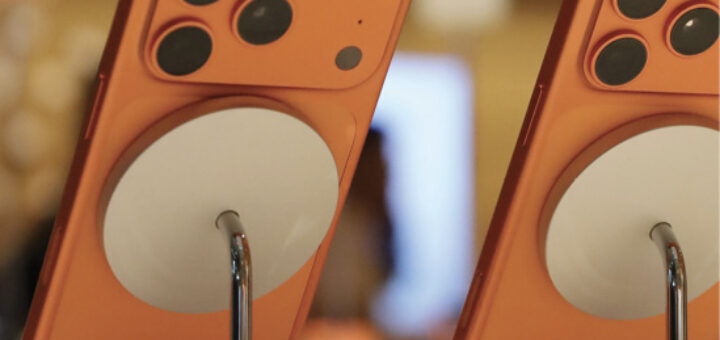
The 17 Pro and Pro Max carry that reputation forward, with their blocky, two-tone aluminum exterior and an interior full of features few other phones on the market possess. All three of the rear cameras, as well as the front camera, on the 17 Pro and Pro Max shoot natively in ProRes RAW format—the same uncompressed high-quality footage as professional video cameras.
They also contain GenLock, a feature that leaves coded markers in video footage, which makes them easier to synchronise with other recording devices in post-production.
To handle the extra load, the Pro and Pro Max come with vapour chambers: a tiny copper pouch that wicks water to spread heat, which prevents the phone from overheating during high-processing tasks, like recording, video editing and gaming.
Plus, both models are powered by the insanely capable A19 Pro Chip and use huge batteries (4000 mAh in the Pro, 5000 mAh in the Pro Max) that give the phone a true all-day battery.
Fitting all of the incredible technology and a massive battery into the handheld device was difficult, necessitating the introduction of the rear plateau. Replacing the protruding camera unit, the new plateau spans the entire width of the rear and encases most of the phone’s important components, with the battery taking up the rest of the real estate.
Overall, the Pro and Pro Max provide features that make the iPhone a professional-level tool that contains the mechanics to complete any task. However, if you’re the average phone user and you just want the best value-for-money proposition, the Air and Pro and Pro Max models may not be right for you.
All about that base
The base-model iPhone has felt like a compromise in recent iPhones, lacking the battery life, screen quality, camera, and processing power of the Pro and Pro Max models without being significantly cheaper.
This year, Apple has given the iPhone 17 the same display, front camera and software upgrades as the Pro and Pro Max models while still presenting battery life improvements compared to the 16, using clever tricks like variable frame rate settings.
The 17 also contains the same ultra-wide and main telephoto cameras as the Pro and Pro Max, and Apple bumped up the lowest model’s storage capacity from 128 gigabytes to 256, all in a package that costs over $300 less than the Air and over $400 less than the Pro.
For 90 per cent of phone users who aren’t looking for a striking form factor like that of the Air or the insane professional capabilities and niche features of the Pro models, the base 17 is the perfect daily driver.
The big picture
After years of iPhone releases that failed to bring any groundbreaking form or functionality, I lost faith in Apple as an innovation company and began to see it as a growth company. Instead of chasing the newest technology, Apple aimed to maximise sales and establish itself as the fashionable, luxurious choice in the smartphone industry.
However, with the 2025 batch of iPhone models, it appears Apple went back to the drawing boards and asked its engineers the tough questions again.
With the Air, Apple demanded a usable phone for the masses in one of the most difficult form factors to fit modern smartphone technology into.
With the Pro models, Apple’s engineers gave professional photographers, videographers and mobile gamers all of the features they could ask for and the cooling, battery performance, and clever packaging to match.
Even the base model shows signs of innovation, bringing many of the Pro models’ best features without bringing a huge price hike compared to the 16 and other competitors’ current phones.
For the first time in years, the new iPhone isn’t just ‘new camera, slightly better battery, some nice colours.’ In 2025, the new iPhone is what Apple always intended it to be: a smooth, elegant and technologically innovative mobile phone that does just about anything anyone could ask of it.