
OPINION: The thawing Silk Road
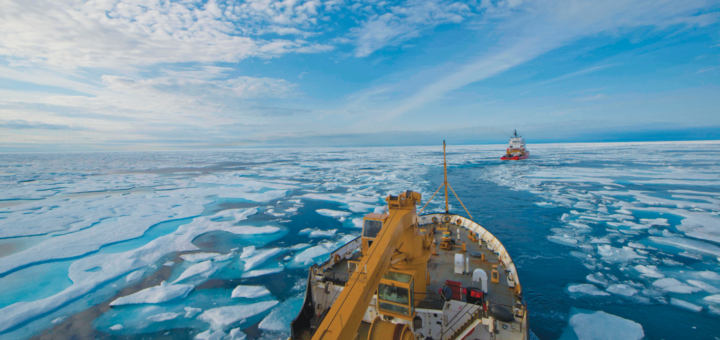
Ryan Montgomery, Staff Writer |
The low sun rises in the 13th century. The Mongol hordes of the Great Khan conquer untold lands for the hungry gods of their eternal blue sky.
Under this new empire, under the newfound peace brought by the yoke of soldiers, trade flourishes. All along the steppe of Central Asia and the Middle East, what was once a home for thieves, smugglers, and bandits is now turned into a mercantile superhighway. The watchful eye and iron fist of Kublai Khan, grandson of Genghis, has turned a den of thieves into a highway of gold.
Chinese silk and Indian spices travel the breadth of Asia, through the gates of Constantinople, into the ever-flowing markets of Europe. Lord Almighty, is there money to be made, and those who control the route make gobs of it. Empires rise and fall based on control of the trade, and fortunes are made and squandered by the day.
Doesn’t that sound nice? Don’t you wish we had that? Don’t you want to be the middleman for a modern Silk Road and rack up money just for being there?
Well, cheer up, my enterprising mercantilist, for there’s a new Silk Road right around the corner. We’ve traded the Golbi Dessert for the Arctic Archipelago, Ulaanbaatar for Ottawa, and the hordes of the Great Kahn for the Canadian Coast Guard. I’m talking, of course, about the Northwest Passage (NWP).
Located above mainland North America, the Arctic Ocean-based sea route runs between the Bering Strait—through Nunavut and the Northwest Territories—to connect the Atlantic and Pacific Oceans.
The Arctic icepatch steadily retreats year after year, opening up new waters for possible navigation, where the NWP has claimed the lives of hundreds of explorers seeking to find a way to circumnavigate North America. Of course, the Inuit knew where it was the whole time, but the explorers never thought to ask.
The point of all this wanton exploring and freezing was to find a direct sea route to Asia from Europe. When they did eventually find it—no shock to anyone—it was covered in ice.
This is how it’s been for the last 10,000 years or so until that old villain, climate change, reared its ugly head.
Since the 1990s, the icepack has consistently melted, with the speed increasing considerably in recent decades. Current predictions state that the NWP will have ice-free summers by the mid-2030s, but with how climate predictions go nowadays, it could be next week, who knows.
Using the NWP is 7,000 kilometres shorter than the current quickest sea route, the Panama Canal—shaving off about two weeks of travel time each voyage. It costs around $150,000 a day to operate a large cargo ship. That’s millions saved on every trip from the Atlantic to the Pacific.
The NWP will do to the Panama Canal what Booth did to Lincoln. In other words, it will completely revolutionize international trade and shipping.
And guess who’s smack-dab in the centre of it? Us.
Now, if you’ll permit me to dive into the raunchy, dog-eat-dog, hot-n-heavy world of international maritime law for a minute, I can explain why this is so important for Canada. Under the United Nations Convention on the Law of the Sea, or, as the cool kids call it, UNCLOS, a nation’s maritime borders are defined in various ways.
A nation has what’s known as internal waters, which are defined as either three kilometres from the nation’s coastline or any waterways that are surrounded by that nation’s land. Within its internal waters, a nation is fully sovereign. It can exercise full legal authority over the sea and can even prohibit innocent passage, or ships just passing through.
Two hundred nautical miles beyond that boundary, you have a nation’s Exclusive Economic Zone (EEZ), in which it holds complete sovereignty over the economic activity in the zone, such as fishing or mineral rights, but can’t prohibit passage through or loitering in the water.
The trillion-dollar legal question is whether or not the NWP is located within Canadian territorial waters or is just a part of its EEZ. If it is within the territorial waters, that means that the Canadian government can charge a fee for every ship passing through. However, if it’s just a part of the EEZ, then they would be required to let shipping boats through without impediment,
In more tragic words, no money for Johnny Canuck.
Many countries want the NWP declared an international waterway, which, under UNCLOS, would obligate Canada to permit the passing through of ships.
Chief among these critics is our old pal, the good ol’ US of A, whose government has repeatedly fought Canada over the status of the NWP as internal Canadian waters, cause that means they wouldn’t get to use it all the time for free.
OK, we’re done now with maritime law, I promise. If you need to pause and go take a cold shower or get a cigarette, I’d understand.
So what needs to be done? Well, there needs to be a lot of investment in the north by the federal government. We need more icebreakers, we need deep-water ports, and we need the ability to stake our claim to the Arctic and actually back it up with steel and ordnance if we want countries to listen to us. To maintain our sovereignty and protect Inuit rights, we needed drastic action yesterday. Or else we risk getting left out in the cold from our own Silk Road.