
Access codes: The new cost barrier in education

Amal Mouaouia, Contributor
At the MRU campus store, the checkout counter has become an unexpected window into the current financial pressures facing university students.
At the start of each semester, students can often be seen asking to purchase online assignment codes separately, hoping to avoid the cost of a full textbook.
These required digital access codes play a major role in this growing financial challenge.
Major publishers such as Wiley, Pearson and McGraw Hill now offer online platforms (WileyPLUS, Pearson MyLab, McGraw Hill Connect, among others) that host quizzes, homework and even exams.
As these platforms require a one-time registration code tied to a student’s account, learners are often forced to purchase the publisher’s code to participate in graded coursework, regardless of whether they have the textbook content itself.
McGraw Hill, a leading educational publisher, reported $85 million in post-secondary billings in its first quarter of fiscal 2025 and a record market share of 27.6 per cent, according to company filings.
In the past, students could mitigate textbook prices by buying used copies, sharing books with classmates, borrowing from libraries, or relying on older editions. Today, access codes are typically single-use and tied to an individual student’s account, rendering used textbooks incomplete and resale impossible.
“The book itself isn’t the issue anymore,” says Mahmood Sawarbi, a third-year accounting student. “It’s the code. You can find the information anywhere, online, YouTube, PDFs, but the grade itself is locked behind a paywall.”
From a faculty perspective, these systems offer clear benefits. Automated grading reduces workload, adaptive homework can target student weaknesses, and analytics can help instructors identify struggling students earlier in the term.
However, to students currently battling rising textbook costs, the frustration lies not in learning being restricted, but in having to pay for the proof that you have learned.
Access code requirements are not communicated until instructors begin posting course materials on Brightspace D2L, the online learning platform used at MRU, sometimes only days before classes begin, leaving many students unexpectedly burdened by additional costs when alternatives are no longer viable.
This struggle reflects a growing tension in higher education: current technology has made finding free PDF versions of textbooks easier than ever, while completing a course is now increasingly requiring publisher-controlled access codes.
This conflict raises questions about whether academic assessment is becoming a form of gatekeeping rather than a measure of learning.
Campus-level responses have varied, with some universities and colleges expanding open educational resource (OER) programs and adopting low- or zero-cost course materials.
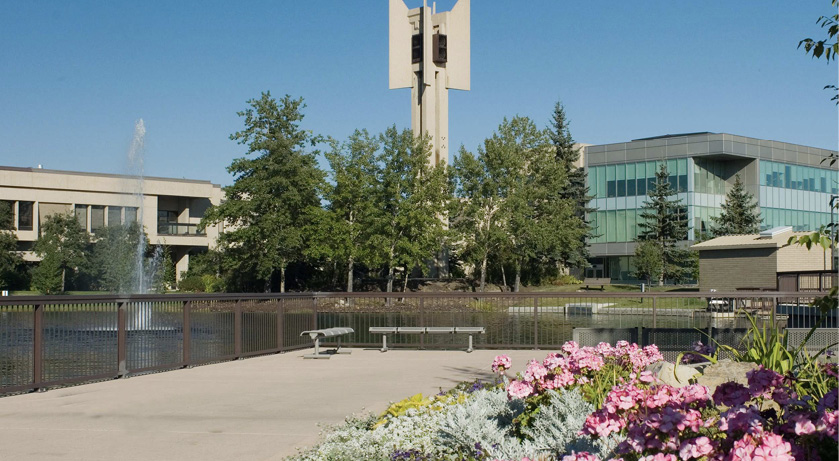
Resources such as SAMRU aim to help students find accessible and affordable
education tools. Photo courtesy of Wikimedia Commons
British Columbia has reported that adopting the initiative has saved its learners over $4 million.
At the Students Association of Mount Royal University (SAMRU), VP Academic Meekena Erkin has identified increasing awareness of OER and zero-cost textbooks (ZCT) as a priority.
“In a time where students are facing increased costs of living and tuition, the importance of open educational resources and zero-cost textbooks continues to grow. These initiatives and resources aim to reduce student financial insecurity through ensuring textbooks and educational materials are more accessible,” she says.
Erkin says that SAMRU’s Representation Executive Council will continue to advocate for more student awareness concerning accessible resources.
There is a clear and growing awareness and momentum around reducing textbook and access code costs, with initiatives like those led by SAMRU’s Representation Executive Council marking important progress.
For now, these expenses remain a significant and growing burden for many students. The frustration is clear, but so is the hope that increased awareness and action will ensure students’ proof of learning is no longer locked behind a paywall.


