The responsible driver’s winter survival guide
Karra Smith, Staff Writer
Driving in the winter can be intimidating, no matter how skilled you are behind the wheel. Snow and ice can make road conditions hazardous and increase the number of vehicle collisions.
Such was the case in Calgary so far this winter. According to an email statement from the Calgary Police Service (CPS), 52 per cent of all collisions reported in November and December 2025 occurred when there was slush, snow or ice on the roads.
Although the chances of a collision are unpredictable, in the event of an accident, it is best to stay calm and be prepared.
What to keep in your vehicle
Although in emergency situations, you can never be too careful, and the more stuff you have, the better. Here are some of the basics recommended by the Canadian Automobile Association (CAA), Canadian Safety Supplies and the Government of Alberta.
With Canadian winters getting pretty chilly, it’s always good to keep extra snow gear—coats, gloves, toques, boots and blankets—for a little warmth. As well as a candle and some matches for an extended heat source.
On the safety side, it’s a good idea to make sure you have a flashlight, first-aid kit, multitool, booster cables, tow rope, a snow brush, and a bag of abrasive material for traction (TIP: avoid sidewalk salt, as it may rust your vehicle). It is also suggested to have reflective triangles you can place outside your car to alert other drivers as to where you are.
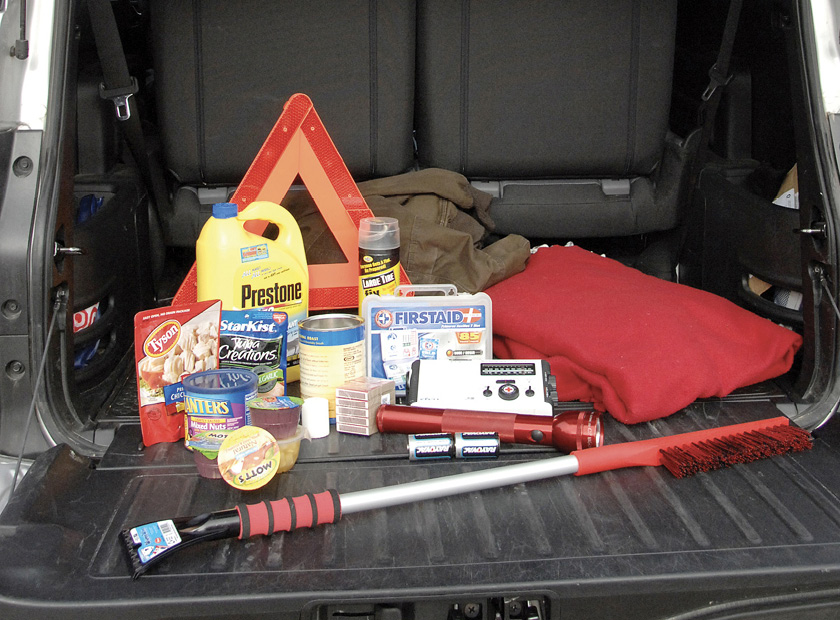
Keeping safety items like flashlights or first-aid kits is essential for winter driving.
Photo courtesy of Kendra Williams / Wikimedia Commons
If you find yourself in a situation where your vehicle is stuck beyond the point of shovelling out your wheels and rocking back and forth, the CAA recommends calling for assistance and hanging tight. Make sure your tailpipe is not blocked by anything to avoid carbon monoxide poisoning, and roll a window down slightly to keep fresh air flowing and to keep you awake.
What to do when in a collision
Unless you have been in the situation before, it’s hard to know what to do in the event of an accident—but here is the key information broken down, according to the Government of Alberta and Calgary police.
Not all accidents need to be reported to the police. If anyone is injured, if one or more of the parties involved does not have a driver’s license or proof of insurance, or if damages exceed $5000, contact authorities immediately. If the vehicles are not drivable, CPS recommends calling its non-emergency line at (403) 266-1234.
Before you proceed with exchanging insurance, safety is key. Make sure your hazard lights are on, that you and the other vehicle are pulled off to a safe location, and that you do not stand between or behind either vehicle.
Take pictures of the damage on the scene and get the insurance and contact information from anyone involved in the accident. If there are any witnesses, collect their contact information as well. For a better idea of what you should gather, check out the Government of Alberta auto collision steps and worksheet.
Call your insurance company as soon as possible and report what happened.
Finally, arrange for any repairs your vehicle may need following the incident.
“Do not admit fault, take responsibility, or sign any statements. Do not pay for damages or make promises at the scene. Never agree to forget the collision or accept money to settle it,” reads the Alberta government’s website.
Keep calm, stay safe and drive responsibly.