
Danielle Smith, Mark Carney collaborate to strengthen Canadian economy
Zafir Nagji, Sports Editor
Prime Minister Mark Carney and Alberta Premier Danielle Smith convened in Calgary to sign a Memorandum of Understanding (MOU) on Nov. 27.
Despite their usual pattern of disagreements, the two politicians collaborated to strike a new deal as they look to strengthen the Canadian economy amid global trade disruptions, particularly by reducing its dependence on the U.S.
Carney and Smith plan to achieve this through a provincial-federal collaboration, with their MOU building a new framework to drive both of their shared ambitions. Those include achieving net-zero emissions by 2050, maximising the potential of Alberta’s energy resources, and injecting the Canadian job market with hundreds of thousands of high-paying careers.
“In the face of global trade shifts and profound uncertainty, Canada and Alberta are striking a new partnership to build a stronger, more sustainable, and more independent Albertan and Canadian economy,” Carney said in a press release.
“We will make Canada an energy superpower, drive down our emissions and diversify our export markets. We want to build big things, and we’re building bigger and faster together.”
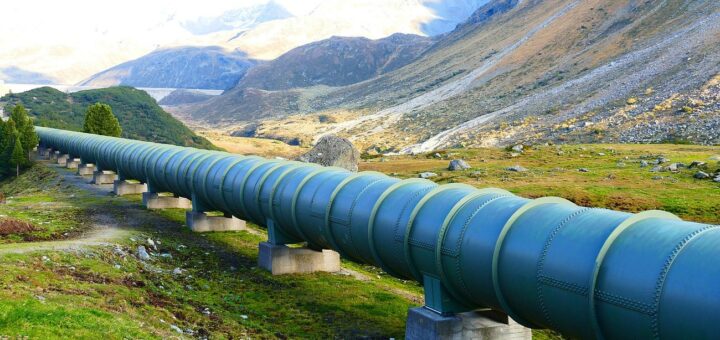
The MOU may have been a collaborative effort, but it was a seemingly obvious win for Smith, who finally received word on an approval process for her oil export pipeline project, which is planned to run from Alberta to the north coast of B.C.
The provincial government’s application must be submitted for approval ahead of the newly set deadline of July 1, 2026.
Carney’s federal government also got some victories through the memorandum, including the advancement of Pathways Plus — the world’s largest carbon capture, utilisation and storage project.
The Pathways Alliance — a group of oilsands companies in Alberta that have all pledged to reach net-zero emissions — aims to capture emissions from 20 oilsands facilities in the province, then transport them 400 kilometres by pipeline to a terminal in Cold Lake, Alta., where they will be stored underground.
The construction of Pathways Plus is also set to strengthen the Canadian energy sector, as it reduces emissions while delivering economic benefits, such as a reported $16 billion boost to GDP and over 40,000 jobs annually.
This comes one year after the CBC reported on the uncertainty surrounding Pathways Plus and the Pathways Alliance. As Peter Findlay, Wood Mackenzie’s global director of CCS economics, said, their ambitious ideas were more than possible, but collaboration would be key to making real progress on them.
“It’s not necessarily insurmountable that there couldn’t be government mechanisms both at the federal and provincial level to account for that uncertainty and to help build a fiscal regime that can actually make projects investable,” Findlay told the CBC in 2024.
The MOU also included new plans for nuclear energy, as the provincial and federal governments will work together to develop a nuclear generation strategy that sets the stage for the construction and operation of nuclear power generation in Alberta and interconnected markets by 2050, with the strategy to be completed by Jan. 1, 2027.
Outside the energy sector, the MOU also set goals for the creation of new data centres, including those optimised for AI. That necessitates growth in Canadian electrical generation, albeit within the bounds of reaching net-zero greenhouse gas emissions for the electricity sector by 2050.
Additionally, the MOU outlines an offer of co-ownership of some projects with Indigenous communities in Alberta and B.C., including collaborating with the B.C. government and sharing Indigenous ownership of a bitumen pipeline focused on exports to Asia, as well as Pathways.
The MOU is a complex, all-encompassing agreement that features many goals and objectives, built on the unlikely collaboration between the Alberta provincial government and the Canadian federal government. Minister of Energy and Natural Resources Tim Hodgson believes this will be a massive step for the province and the country as a whole.
“Canada is acting decisively to establish ourselves as a global energy superpower in the face of a changing world,” Hodgson said.
“Together, Canada and Alberta will not only export critical energy to our customers, [but] we will also support our allies, create hundreds of thousands of jobs here at home, and show that our energy sector can lead on a global stage.”